

There is a particular kind of broccoli that most of us grew up with, and it was not a good ambassador for the vegetable. It arrived boiled until it was grey-green and soft, smelling faintly of a school kitchen, and it sat on the plate looking apologetic while everyone politely ate around it. If that is your main memory of broccoli, I understand why you might not be in a hurry to cook it again. Roasting changes the whole story. In a hot oven, broccoli turns nutty and sweet at the edges, the little florets crisp up like tiny trees, and the whole thing becomes something you actually reach for second helpings of, which is not a sentence I ever expected to write about broccoli either.
This recipe is the one I make when I want a vegetable side that feels like a real dish rather than an obligation. It takes about ten minutes of hands-on work and twenty minutes in the oven, and the ingredient list is short enough to remember without looking it up twice. Olive oil, salt, garlic, Parmesan, and lemon do all the work, and each one earns its place. The oil helps the edges crisp, the salt draws out the flavour, the garlic goes golden and mellow in the heat, the Parmesan melts into salty, lacy patches, and the lemon zest at the end wakes everything up. Nothing here is fancy, and nothing needs a special trip to the shops, which is exactly why it has become a regular in my kitchen.
What I love most about this dish is how forgiving it is. Broccoli is cheap, it keeps well in the fridge for days, and it pairs with almost anything you are already cooking, from a simple roast chicken to a plate of pasta or a fried egg on toast. You can make a small batch for two people or fill two trays for a crowd, and the method stays the same. If you have ever wished for a vegetable side that does not feel like a compromise, this is a good place to start.
Why You Will Love This Recipe
The first reason is the texture, because texture is where most broccoli dishes go wrong. Boiled broccoli is soft all the way through, which is fine but forgettable. Roasted broccoli has two textures at once: the stalks stay tender and almost sweet, while the tips of the florets turn crisp and deeply browned, with a nutty flavour that is nothing like the boiled version. Those crispy bits are the best part, and there is always a quiet competition in my house over who gets the most of them. Cutting the florets a little smaller than you think you should gives you more of those crisp edges, which is a trick worth knowing.
The second reason is speed. From the moment you start cutting the broccoli to the moment it comes out of the oven, you are looking at roughly half an hour, and most of that time the oven is doing the work while you get on with the rest of dinner. There is no blanching, no steaming, no separate sauce to make, and only one tray to wash up. On a busy weeknight, that matters more than almost anything else. The recipe is also naturally gluten-free and vegetarian, and it works well at a table where people eat different things, since it sits happily next to meat, fish, or a grain bowl without needing any changes.
Finally, this is a recipe that makes you look like a better cook than you had to work to be. A tray of golden, lemon-scented broccoli with melted Parmesan looks generous and intentional, the kind of side that makes a simple dinner feel put together. It is also a genuinely nutritious choice, and the background on broccoli explains why this humble green vegetable has earned its reputation. For more dishes in the same spirit, the sides and vegetables collection has plenty of ideas to explore next.
- Crispy edges, tender stalks: the contrast that makes roasted broccoli so good.
- Ready in about 25 minutes: ten minutes of prep, the oven does the rest.
- Five main ingredients: olive oil, garlic, Parmesan, lemon, and salt.
- Goes with everything: chicken, fish, pasta, grains, or eggs.
- Naturally gluten-free and vegetarian: easy for mixed tables.
Ingredients You Will Need
Choose broccoli that feels firm and looks a deep green, with tight florets and no yellow patches. A head that feels heavy for its size is usually fresher, and the stalk should feel firm rather than bendy. Do not throw the stalk away: peeled and sliced, it roasts beautifully and tastes sweet and mild, almost like a different vegetable. For the Parmesan, a block that you grate yourself melts better and tastes sharper than the pre-grated kind, which often contains anti-caking agents that stop it melting smoothly. If pre-grated is what you have, it will still work, just use a little less and scatter it more evenly.
- 2 large heads of broccoli (about 700g), cut into florets
- 3 tablespoons olive oil
- 3 garlic cloves, thinly sliced
- 1/2 teaspoon fine sea salt
- 1/4 teaspoon black pepper
- 1/4 teaspoon chilli flakes (optional, but lovely)
- 50g Parmesan, finely grated
- Zest of 1 lemon, plus 1 tablespoon lemon juice
- 1 tablespoon chopped fresh parsley (optional, for serving)
Cut the florets into roughly even pieces, about the size of a large strawberry, so they cook at the same rate. If some pieces are much bigger than others, the small ones will burn while the big ones are still firm, and nobody wants that. Halve any thick stalks lengthways so they cook through, and peel the main stalk, slice it into coins, and add those to the tray too. Give everything a quick rinse and dry it well, because wet broccoli steams instead of roasting, and dry broccoli is the whole secret to crisp edges.
How to Make Roasted Broccoli with Parmesan and Lemon
Heat the oven to 220°C (425°F) and put a large baking tray in the oven while it heats. A hot tray is a small step that makes a real difference: when the broccoli hits hot metal, it starts crisping straight away instead of sitting in cool oil and softening. While the oven heats, toss the broccoli florets and stalk coins in a large bowl with the olive oil, salt, pepper, and chilli flakes if you are using them. Use your hands and really get in there, making sure every floret has a light coating of oil, including the nooks and crannies where the crispness happens.
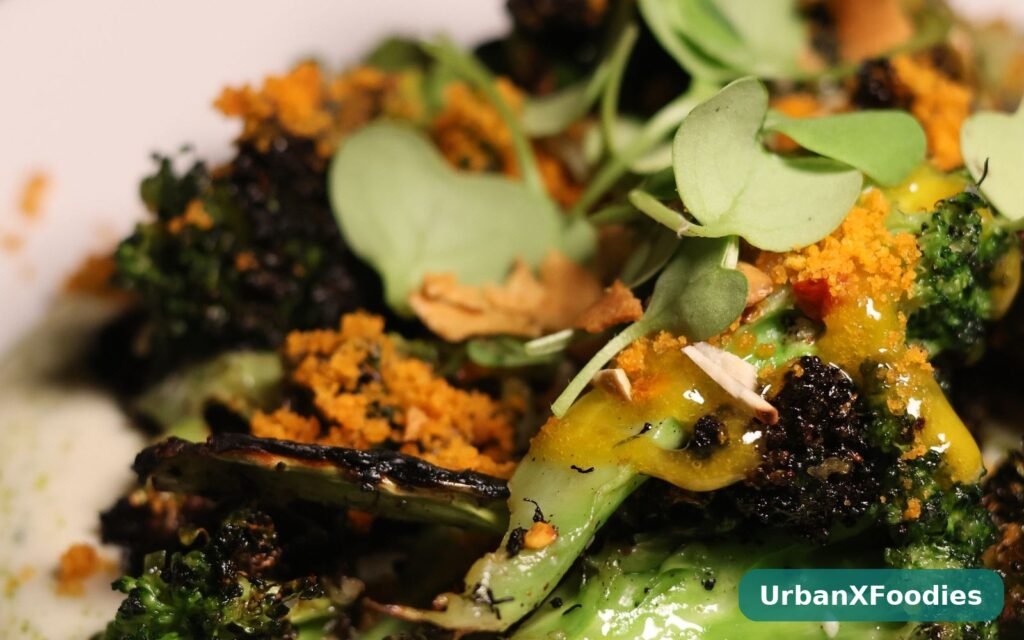
Tip the broccoli onto the hot tray in a single layer, with space between the pieces. This is the rule that matters most, and it is the one people break most often. Crowded broccoli steams, spaced-out broccoli roasts, and no amount of extra time in the oven fixes a crowded tray. If your tray is small, use two trays rather than squeezing everything onto one. Scatter the sliced garlic over the top, then roast for 15 minutes without opening the oven door, so the undersides can brown properly.
After 15 minutes, take the tray out and scatter the grated Parmesan over the broccoli, then return it to the oven for another 5 to 7 minutes, until the cheese has melted into golden patches and the floret tips are deeply browned and crisp. The garlic should be golden rather than dark brown; if it is colouring too fast, push it under a few florets for the last minutes. Take the tray out, squeeze over the lemon juice, scatter over the lemon zest and parsley, and toss gently right on the tray. Taste and add another pinch of salt if it needs it, then serve straight away, while the edges are still crisp. If you like the sound of another no-fuss side, the crispy potatoes without breadcrumbs use the same hot-tray idea and pair beautifully with this broccoli on a roast dinner table.
- Step 1: Heat the oven to 220°C (425°F) with the tray inside.
- Step 2: Toss the broccoli with oil, salt, pepper, and chilli flakes.
- Step 3: Spread in a single layer on the hot tray, scatter over the garlic, and roast for 15 minutes.
- Step 4: Scatter over the Parmesan and roast for 5 to 7 minutes more, until golden and crisp.
- Step 5: Finish with lemon juice, lemon zest, and parsley, then serve immediately.
For the air fryer version, cook the oiled, seasoned broccoli at 200°C (400°F) for 10 to 12 minutes, shaking the basket halfway through, then add the Parmesan and cook for 2 to 3 minutes more until melted. You will need to work in batches if your basket is small, because crowding is just as much of a problem in an air fryer as it is in the oven, but the result is every bit as good and the cooking time is shorter.
Tips
The single biggest factor in this recipe is dryness. Wash the broccoli, then dry it thoroughly in a clean tea towel or a salad spinner before you oil it. Water on the surface turns to steam in the oven, and steam is the enemy of crispness. The second factor is heat: a properly hot oven and a preheated tray give you browning from the moment the broccoli goes in. If your oven runs cool, or if you are using a glass dish rather than a metal tray, give it an extra few minutes and look for deep golden tips rather than watching the clock. Ovens vary, and the colour of the florets is a better guide than any timer.
Do not add the Parmesan too early. Cheese scattered at the start of roasting will brown too much and can taste bitter by the time the broccoli is done, while cheese added for the last few minutes melts into salty, golden patches that cling to the florets. The same goes for the lemon: juice added before roasting mostly evaporates and can make the broccoli soggy, while lemon added at the end stays bright and fresh. These two timing details are small, but they are the difference between good roasted broccoli and the kind people ask you to make again. A similar approach to timing and heat is used in the Parmesan-roasted broccoli recipe from Taste of Home, which is a reassuring second opinion if you want one.
Cut size matters more than most recipes admit. Florets that are all roughly the same size cook evenly, and slightly smaller florets give you more crisp edges per bite, which is where the flavour lives. If you like your broccoli very crisp, cut the florets a touch smaller and give them a couple of extra minutes, watching closely at the end so the garlic does not burn. And resist the urge to stir too often: leaving the broccoli undisturbed for the first 15 minutes lets the undersides form a proper crust, and flipping too soon tears that crust away before it has set.
Variations to Try
Once you have the basic method down, it is easy to change the character of the dish without changing the work. For an Asian-inspired version, skip the Parmesan and lemon, toss the roasted broccoli with a tablespoon of soy sauce, a teaspoon of sesame oil, a squeeze of lime, and a scattering of sesame seeds and sliced spring onions. For a Mediterranean version, add a handful of cherry tomatoes and a few olives to the tray for the last ten minutes, and finish with crumbled feta instead of Parmesan. Both versions use the same hot oven and the same single tray, and both are worth adding to your regular rotation.
For a heartier side, toss the finished broccoli with a tin of drained chickpeas that you roasted on the same tray, or scatter over toasted pine nuts or flaked almonds for crunch. A drizzle of tahini thinned with lemon juice and warm water turns it into something substantial enough for lunch on its own, especially with flatbread. And if you are feeding children who are suspicious of green vegetables, the Parmesan version is your best bet: salty cheese and crispy edges have converted more reluctant eaters than any amount of persuasion ever has. Serve it alongside a familiar main, like the chicken skillet recipes without oven, and let the broccoli quietly steal the show.
If you want to turn this into a pasta dish, toss the roasted broccoli through hot pasta with extra Parmesan, a splash of the pasta cooking water, and plenty of black pepper. The crispy bits soften slightly into the sauce, and the whole thing tastes like something from a good Italian restaurant rather than a weeknight thrown-together dinner. It is a useful trick for nights when the fridge looks empty but there is a head of broccoli and a box of pasta waiting to be used.
Serving Ideas
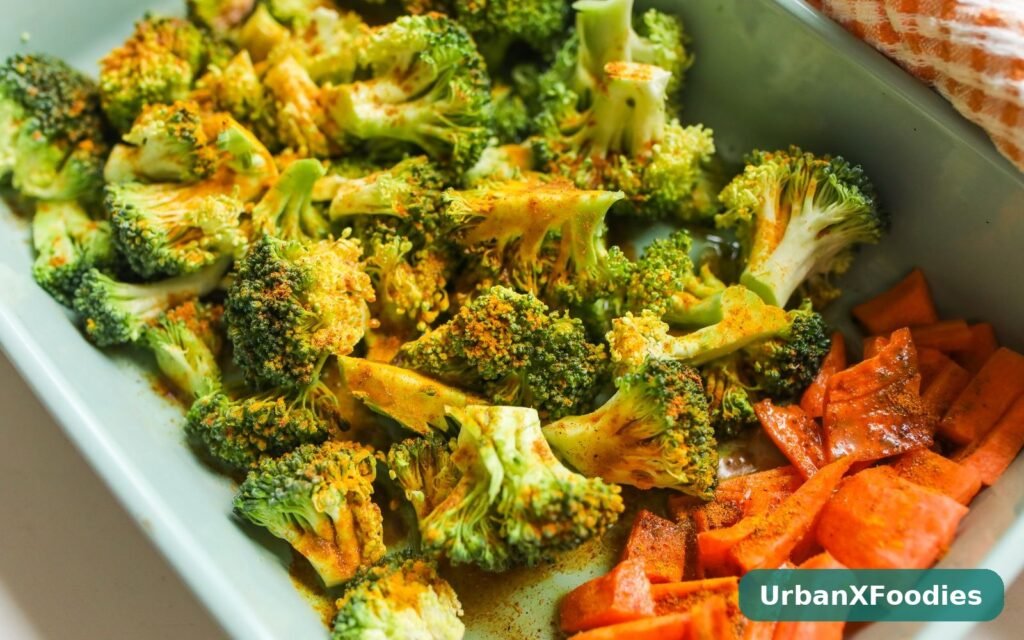
This broccoli goes with almost any main course, which is part of why it earns its place in the weekly rotation. With roast chicken and potatoes, it is the classic Sunday side, adding colour and a fresh, lemony note to a rich plate. With grilled fish and rice, it keeps dinner light but satisfying, and the lemon in the broccoli echoes whatever citrus you serve with the fish. With a simple pasta in olive oil and garlic, it turns a plain supper into something that feels complete. And with a fried egg and good bread, it makes a quick lunch that is far better than the sum of its parts.
For a grain-bowl dinner, pile the broccoli over cooked quinoa or couscous with a dollop of yoghurt, some toasted seeds, and a drizzle of chilli oil. The warm broccoli softens the yoghurt slightly, and the whole bowl comes together in the time it takes to cook the grain. For a crowd, double the recipe across two trays and keep the first tray warm in a low oven while the second finishes, but serve it uncovered, since covering traps steam and softens those hard-won crispy edges. A squeeze of extra lemon and a fresh grating of Parmesan over the serving platter, just before it goes to the table, makes the dish look as good as it tastes. On a busy night when you want the whole meal to feel this effortless, the easy dinner recipes with frozen vegetables pair well on the same table.
Storage and Make-Ahead
Leftover roasted broccoli keeps in the fridge for three to four days in a sealed container, though it will lose its crispness as it cools. That is not a disaster: cold or room-temperature leftover broccoli is excellent chopped into salads, folded through pasta, or piled onto toast with ricotta. To bring back some of the crispness, spread it on a tray and roast at 220°C (425°F) for five to seven minutes, or air fry at 200°C (400°F) for three to four minutes, until it is hot and the edges have firmed up again. It will not be quite as crisp as freshly made, but it will be close, and it is far better than throwing it away.
You can also prep ahead: cut the broccoli into florets up to two days in advance and keep them in a sealed container lined with a dry tea towel in the fridge. The dry towel absorbs moisture, which actually helps the final crispness, so this is one of those rare cases where making ahead makes the dish better rather than worse. Toss with oil and seasonings just before roasting, and add a minute or two to the cooking time if the broccoli is fridge-cold. For freezing, roasted broccoli is not at its best after thawing, so I would rather freeze raw florets in a bag for up to three months and roast them from frozen, adding about five extra minutes and an extra drizzle of oil to make up for the moisture.
Frequently Asked Questions
Why is my roasted broccoli soggy instead of crispy?
The usual causes are a crowded tray, wet broccoli, or an oven that is not hot enough. Give each floret space, dry the broccoli thoroughly before oiling it, and make sure the oven is fully preheated to 220°C (425°F) with the tray inside. One of these is almost always the fix, and dryness alone solves most soggy-broccoli problems.
Do I need to peel the broccoli stalks?
You do not need to, but peeling the thick outer layer of the main stalk gives you a sweeter, more tender result, and the peeled stalk coins roast beautifully. If you are short on time, just trim the woody end and slice the stalk as it is. Either way, do not throw the stalk away, since it is some of the best-tasting part of the plant.
Can I use frozen broccoli for this recipe?
You can, but the result will be softer and less crisp than fresh broccoli, because frozen florets release more water as they cook. If frozen is what you have, roast it straight from frozen on a hot tray with a little extra oil, spread it out well, and give it a few extra minutes. It will still taste good, especially with the Parmesan and lemon, but it will not have quite the same crispy edges.
What can I use instead of Parmesan?
Pecorino Romano is the closest swap and tastes a little saltier and sharper, so use slightly less. Grana Padano works well too, and a mature Cheddar gives a different but still delicious result, though it melts more greasily. For a dairy-free version, leave the cheese out and finish with toasted breadcrumbs fried in olive oil with garlic, which gives you a similar salty crunch.
How do I stop the garlic from burning?
Slice the garlic rather than mincing it, since thin slices brown more slowly than tiny pieces, and scatter it over the broccoli rather than leaving it exposed on the tray. If your oven runs hot, add the garlic halfway through the first roasting stage instead of at the start. Golden garlic is sweet and mellow, but burnt garlic tastes bitter and can spoil the whole tray, so it is worth keeping an eye on it.
Can I make this in advance for a dinner party?
You can prep the broccoli a day ahead and roast it just before serving, which is the best approach, since roasted broccoli is at its finest straight from the oven. If you must roast ahead, keep it uncovered in a low oven for up to twenty minutes, which holds the heat without trapping steam. Add the lemon zest at the last moment, so the citrus stays bright rather than fading.


