
Introduction
There is a special kind of disappointment reserved for potatoes that promised crispness and delivered sogginess. You did everything right, or so you thought, and yet they came out pale, soft, and faintly steamed, the sort of potatoes you eat politely while wishing you had ordered something else. I have made those potatoes more times than I care to admit, and the recipe below is the result of working out, slowly and through trial and error, what actually makes the difference between a potato that crunches and a potato that sighs.
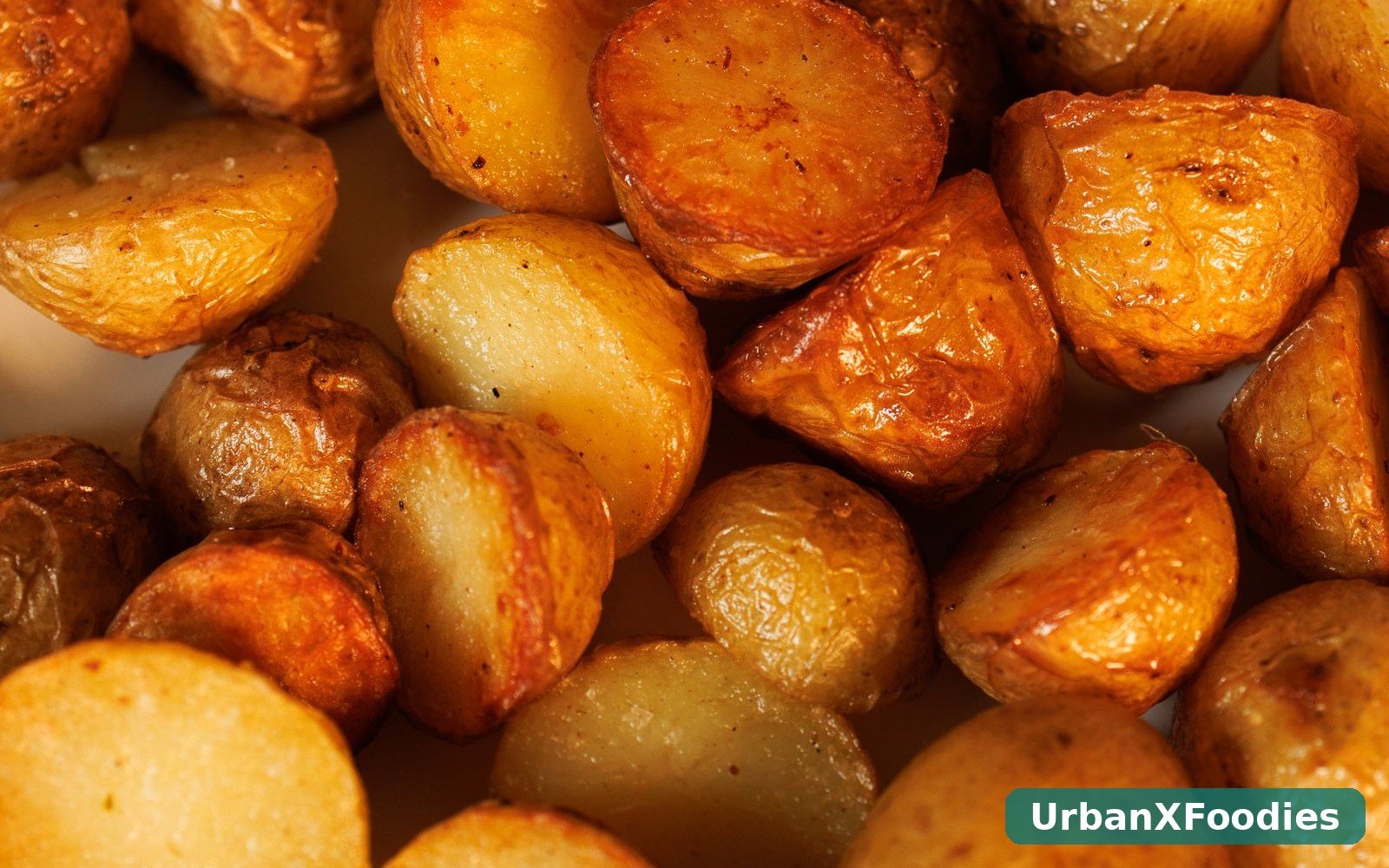
The good news is that none of the secrets involve breadcrumbs, coatings, or special equipment. Crispy potatoes without breadcrumbs are not a compromise version of some coated ideal. They are the real thing, and arguably the better thing, because the crispness comes from the potato itself: from starch that has been roughed up and dried out, from a hot oven, and from enough fat and space to let each piece brown properly. When you get those three things right, the outside turns golden and shattering, the inside stays fluffy like a good baked potato, and you wonder why you ever thought a coating was necessary.
This recipe works with the oven, which is how I make it most often, and the same principles apply if you prefer the air fryer, with timings noted below. It uses ordinary floury potatoes, the kind sold for roasting and mashing, and a handful of pantry seasonings. The method takes a little longer than throwing potatoes in a pan, mostly because of the parboiling step, but that step is the whole secret, and it is almost entirely hands-off. You will spend about fifteen minutes actively doing things, and the oven will do the rest.
Below you will find the ingredients, the full method, the tips that matter most, variations for different flavours, serving ideas for every kind of meal, and storage notes, plus answers to the questions that come up most often when people try to get their potatoes properly crisp.
Why You Will Love This Recipe
Start with the texture, because that is what this recipe is really about. A properly crisp potato has two textures at once: an outside that crackles and shatters when you bite it, and an inside that is soft, fluffy, and almost creamy. That contrast is what makes roast potatoes so satisfying, and it is entirely achievable without any coating at all. The parboiling and roughing-up step creates a starchy, fluffy surface on each piece, and that surface is what turns golden and crisp in the oven. It is the potato’s own starch doing the work, and it does it better than breadcrumbs ever could.
Then there is the simplicity. No breading station, no egg wash, no crumbs, and no special ingredients to buy. Potatoes, oil, salt, and whatever herbs or spices you already own are the whole list. The recipe is also naturally gluten-free and vegan as written, which makes it an easy side dish for mixed tables where dietary needs vary. And it scales beautifully: double it for a crowd, halve it for two people, and the method stays exactly the same. Potatoes are also one of the most forgiving and nutritious staple foods, and the background on the potato explains why they have fed so many people so well for so long.
Finally, these potatoes go with everything. Roast chicken, grilled fish, a fried egg, a big salad, a curry, a stew, or absolutely nothing at all, eaten standing up in the kitchen straight off the tray, which is how at least a few of them always disappear in my house. They are the side dish that threatens to upstage the main course, and they reheat well enough to be worth making extra. For more ideas in the same category, the sides and vegetables collection has plenty to explore.
- No breadcrumbs needed: crispness comes from the potato itself.
- Crunchy outside, fluffy inside: the contrast that makes roast potatoes great.
- Simple pantry ingredients: potatoes, oil, salt, and seasonings you already own.
- Naturally gluten-free and vegan: easy for mixed tables.
- Scales effortlessly: from dinner for two to a crowd.
Ingredients You Will Need
Choose floury potatoes if you can: russets, King Edwards, Maris Pipers, or any variety sold for roasting or mashing. Waxy potatoes, the kind sold for salads, hold their shape well but do not fluff up the same way, and fluff is what you want here. The oil matters too: use something with a high smoke point and a neutral flavour, like sunflower, vegetable, or light olive oil, rather than extra virgin olive oil, which can smoke and taste bitter at roasting temperatures.
- 1kg (about 2 1/4 lbs) floury potatoes, peeled
- 1 teaspoon fine sea salt, plus more for the boiling water
- 1/2 teaspoon baking soda (optional, but it helps)
- 4 tablespoons oil with a high smoke point
- 1 teaspoon garlic powder
- 1 teaspoon smoked paprika (optional)
- 1 tablespoon fresh rosemary or thyme leaves, or 1 teaspoon dried
- Flaky sea salt and black pepper, to finish
Cut the potatoes into roughly even chunks, about 4 to 5cm across. Evenness matters more than exact size: pieces that are wildly different sizes will cook unevenly, and you will end up with some burnt and some pale. If a potato is small, halve it; if it is large, cut it into three or four pieces. Do not worry about perfect shapes. Rough, craggy edges are a feature here, because craggy surfaces crisp up better than smooth ones, which is a happy coincidence for anyone who does not enjoy precise knife work.
How to Make Crispy Potatoes Without Breadcrumbs
Put the cut potatoes in a large pot, cover with cold water, and add a generous pinch of salt and the baking soda if you are using it. The baking soda is optional, but it raises the pH of the water, which breaks down the surface of the potatoes a little more and gives you an even fluffier, crisper exterior. Bring to a boil and cook for seven to eight minutes, until the outsides are just starting to soften and the edges look slightly fluffy when you nudge a piece with a fork. You want them parboiled, not fully cooked: a knife should meet resistance in the centre.
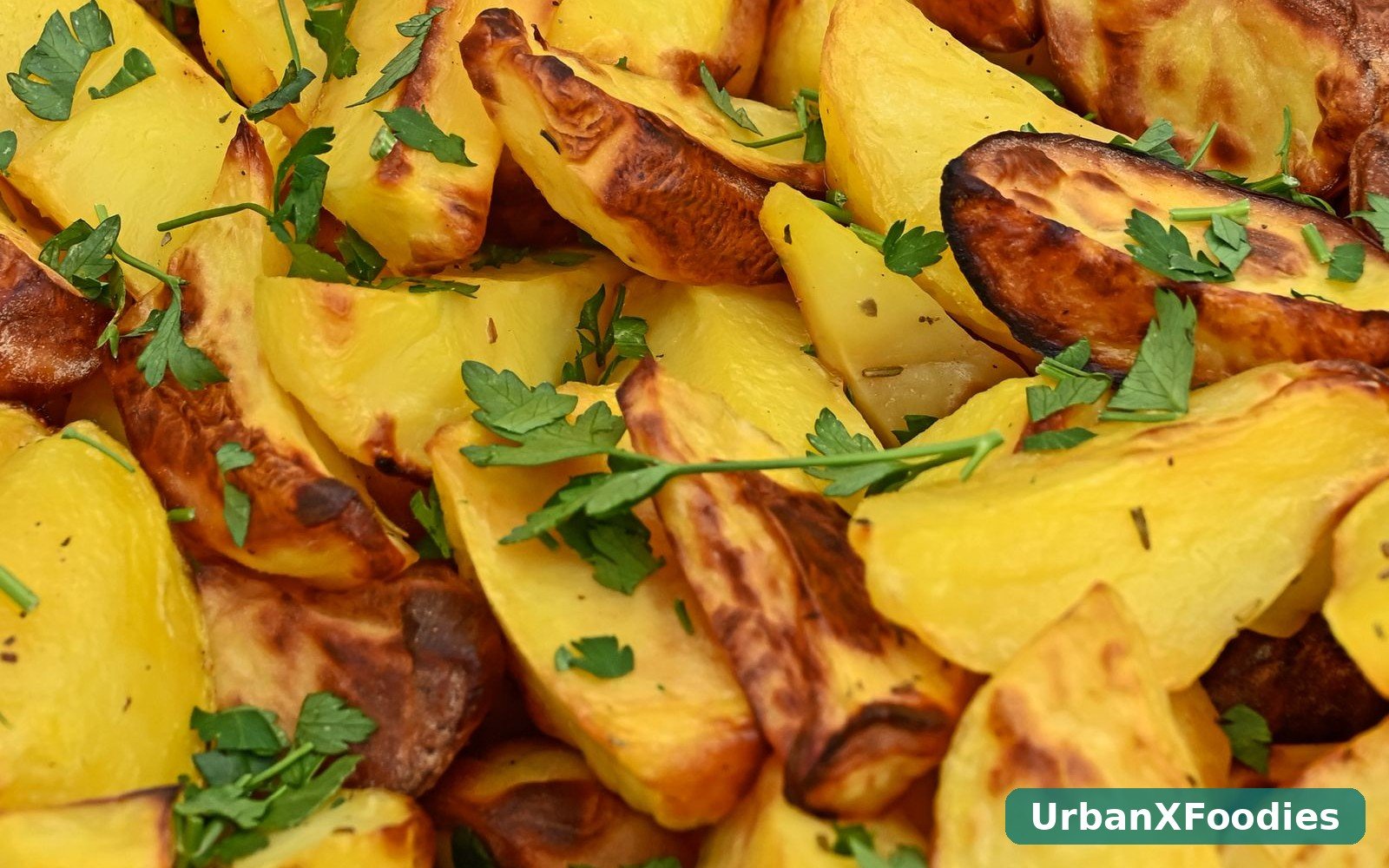
Drain the potatoes well, then put them back in the hot, empty pot for a minute to steam dry, shaking the pot gently. This is the step that makes the magic happen: put the lid on the pot and shake it firmly a few times to rough up the surfaces of the potatoes. You are aiming for pieces that look battered and fluffy around the edges, almost as if they have been lightly mashed on the outside. That rough, starchy surface is what will turn into the crisp crust, so do not be gentle. Meanwhile, heat the oven to 220°C (425°F) and put the oil on a large baking tray in the oven for five minutes, so the tray and oil are properly hot before the potatoes arrive.
- Season the roughed-up potatoes: toss them with the garlic powder, paprika, herbs, and a good pinch of salt while they are still warm and steamy.
- Tip onto the hot tray: spread them in a single layer in the hot oil, turning each piece so it is coated. They should sizzle on contact.
- Roast undisturbed: 20 minutes at 220°C (425°F) without opening the oven, so the bottoms crisp properly.
- Turn and finish: flip each piece and roast for another 20 to 25 minutes, until deep golden and crisp all over.
The total roasting time is usually 40 to 45 minutes, and the potatoes are done when they are deep golden, crisp to the touch, and fluffy inside when you break one open. Season with flaky salt and black pepper while they are still hot, and serve immediately, because crisp potatoes wait for no one. They are at their absolute best in the first fifteen minutes out of the oven, and they know it. If you are building a whole meal around them, the chicken thighs without breading in the air fryer are a natural partner, and the two dishes share the same no-coating philosophy.
For the air fryer version, follow the same parboiling and roughing-up steps, then air fry the seasoned potatoes at 200°C (400°F) for 20 to 25 minutes, shaking the basket every eight minutes or so, until crisp and golden. You will need to cook in batches if your basket is small, because crowding is the fastest way to lose crispness, but the result is just as good, and the cooking time is shorter.
Tips for Maximum Crispness
Space is the rule that matters most, and it is the one people break most often. Potatoes that touch each other steam instead of roasting, and no amount of extra time fixes that. Use the largest tray you own, spread the pieces in a single layer with gaps between them, and use two trays rather than one crowded one if you have to. It feels wasteful to use two trays for one side dish, but it is the difference between crisp and soggy, and that difference is the whole point.
Hot oil and a hot tray are the second rule. Potatoes that go onto a cold tray sit in cool oil and absorb it instead of crisping in it, which gives you greasy potatoes rather than golden ones. Heating the tray and oil in the oven before the potatoes arrive means the pieces sizzle on contact and start crisping immediately. And resist the urge to turn them too early: the first twenty minutes undisturbed is when the bottoms form their crust, and flipping too soon tears that crust off. Patience here is rewarded, as it so often is in cooking. The BBC Good Food ultimate roast potatoes recipe follows the same parboil and rough-up approach, and it is a reassuring read if you want a second opinion.
Dryness is the third rule. Drain the potatoes thoroughly, steam them dry in the hot pot, and do not add any liquid with the seasonings. Wet potatoes steam, dry potatoes roast, and the minute you spend letting them steam dry pays for itself many times over in the finished texture. If your potatoes still come out soft, check these three things in order: space, heat, and dryness. One of them is almost always the culprit.
Variations to Try
The base recipe is deliberately simple, which makes it easy to change. For garlic and herb potatoes, toss the hot, finished potatoes with a crushed clove of garlic, chopped parsley, and a squeeze of lemon, which gives them a fresh, bright finish. For spicy potatoes, add half a teaspoon of chilli powder and a teaspoon of cumin to the seasoning before roasting, and serve with a cooling yoghurt dip. For a Mediterranean version, roast with rosemary, lemon zest, and a handful of olives added in the last fifteen minutes.
A cheesy version works well too: sprinkle finely grated Parmesan over the potatoes in the last ten minutes of roasting, so it melts and crisps onto the surfaces without burning. And for a breakfast version, make the potatoes a little smaller, roast them until very crisp, and serve with fried eggs and a sharp hot sauce. The method never changes, only the seasoning does, which is what makes this recipe so useful across the week.
If you want to turn the potatoes into a fuller meal rather than a side, top them with shredded leftover chicken, a fried egg, and a drizzle of sauce, or serve them alongside a one-pan main like the chicken skillet recipes without oven, which keeps the whole dinner to one pan plus one tray. Potatoes are happy to be the star or the supporting act, and they do both jobs well.
Serving Ideas
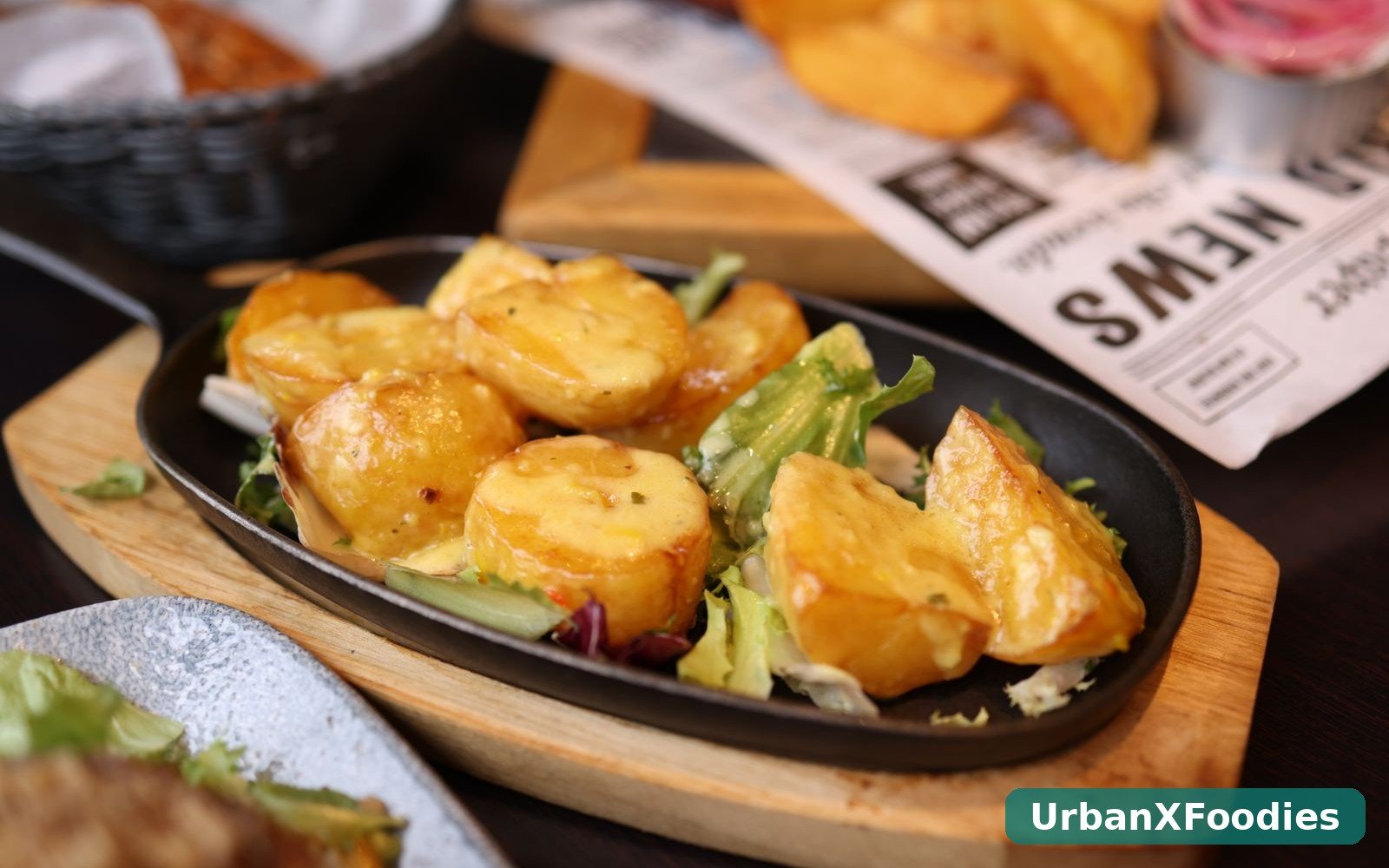
These potatoes go with almost any main course, which is part of why they are worth mastering. With roast chicken and gravy, they are the classic Sunday side. With grilled fish and a green salad, they make a lighter dinner feel substantial. With a fried egg and baked beans, they turn breakfast into something worth sitting down for. And with a curry or a stew, they are excellent for scooping up sauce, which is a job they take very seriously.
For dipping, the options are generous: garlic mayonnaise, sour cream and chives, chimichurri, sweet chilli sauce, or a simple yoghurt and herb dip all work well. Put out two or three small bowls and let people choose, since the best dip for a crisp potato is a matter of strong personal opinion. A squeeze of lemon and a scattering of fresh herbs over the finished tray, just before serving, lifts the whole dish and makes it look as good as it tastes.
For a crowd, make a double batch across two trays and keep the first tray warm in a low oven while the second finishes. The potatoes hold their crispness for twenty minutes or so if they are spread out and not covered, which is important: covering them with foil traps steam and undoes all your work. Serve them uncovered, on a warm platter, and watch them disappear. For a busy-night meal built on the same low-effort spirit, the easy dinner recipes with frozen vegetables pair well on the same table.
Storage and Make-Ahead
Cooked potatoes keep in the fridge for three to four days in a sealed container, though they will lose their crispness as they cool and sit. To bring them back, spread them on a tray and roast at 220°C (425°F) for ten to twelve minutes, or air fry at 200°C (400°F) for five to six minutes, until crisp again. The air fryer is particularly good at this, and leftover potatoes reheated this way are genuinely close to freshly made, which is more than can be said for most leftovers.
You can also prep ahead: parboil, rough up, and season the potatoes up to a day in advance, then refrigerate them uncovered on a tray. The dry fridge air dries the surfaces further, which actually improves the final crispness, so this is one of those rare cases where making ahead makes the dish better, not worse. Take them out twenty minutes before roasting, toss with the oil on a hot tray, and roast as usual, adding a few extra minutes if they are fridge-cold.
For freezing, cool the roasted potatoes completely, freeze them in a single layer on a tray, then transfer to a bag for up to three months. Reheat from frozen at 220°C (425°F) for fifteen to twenty minutes, turning once, until crisp and piping hot. They will not be quite as perfect as fresh, but they are far better than no potatoes at all, and on a night when cooking feels like too much, that is a meaningful difference.
Frequently Asked Questions
Why are my roast potatoes soggy instead of crispy?
The usual causes are crowding the tray, a cold tray or cold oil, wet potatoes, or not parboiling and roughing them up. Give each piece space, heat the tray and oil before the potatoes go on, drain and steam-dry them well, and shake them in the pot to rough up the surfaces. One of these is almost always the fix.
Do I need to peel the potatoes?
Peeling is traditional and gives the most even crispness, but you can leave the skins on if you prefer, especially with thin-skinned varieties. Scrub them well, cut into chunks, and proceed as written. The skins add a little extra texture and a rustic look, and they hold up well to roasting.
What type of potato is best for roasting?
Floury potatoes are best: russets, King Edwards, Maris Pipers, or any variety sold for roasting or mashing. They fluff up when parboiled, and that fluffy surface is what turns crisp. Waxy potatoes, sold for salads, hold their shape but do not crisp the same way, so save those for potato salad.
Does baking soda really help?
Yes, a small amount in the boiling water raises the pH, which breaks down the potato surfaces a little more and gives you a fluffier, crisper exterior. It is optional, and the recipe works without it, but if you want the crispiest possible result, it is worth adding. Use just half a teaspoon for a large pot.
Can I make crispy potatoes in the air fryer?
Yes, and they turn out very well. Follow the same parboiling and roughing-up steps, then air fry at 200°C (400°F) for 20 to 25 minutes, shaking the basket every eight minutes, until golden and crisp. Cook in batches if your basket is small, since crowding is the fastest way to lose crispness.
How do I keep roast potatoes crispy when serving a crowd?
Roast them in batches and keep finished batches warm in a low oven, spread out on a tray and uncovered. Covering them traps steam and softens the crust. They hold well for about twenty minutes this way, so time your last batch to finish just as you sit down to eat.


Pingback: Small Batch Chocolate Chip Cookies Without Brown Sugar – UrbanXFoodies
Pingback: Classic Banana Pudding With Vanilla Wafers – UrbanXFoodies
Pingback: Roasted Broccoli with Parmesan and Lemon – UrbanXFoodies
Pingback: Creamy Mashed Potatoes with Roasted Garlic – UrbanXFoodies