

There is a reason mashed potatoes appear at almost every celebration meal, and it is not just tradition. A bowl of properly made mashed potatoes is one of the most comforting foods there is: warm, silky, buttery, and quietly luxurious in a way that fancier dishes rarely manage. And yet mashed potatoes are also one of the easiest dishes to get slightly wrong, ending up gluey, lumpy, or bland, the kind of potatoes you eat politely while wishing they were better. This recipe is the result of years of making them for family dinners, and it fixes the common mistakes with a few simple habits that are easy to remember.
The secret ingredient here is roasted garlic, and it changes the dish in a way that raw or quickly fried garlic never could. Roasting turns garlic sweet, soft, and mellow, almost like a paste, and when it is mashed into the potatoes it gives them a deep, savoury warmth without any harsh bite. People will ask what makes these potatoes taste so good, and they will be surprised when you tell them it is just garlic, treated properly. Combined with warm milk, plenty of butter, and potatoes that have been cooked until truly tender, the result is mash that is smooth without being gluey, rich without being heavy, and flavourful enough to stand on its own.
This is not a quick five-minute side, but it is not a difficult one either. Most of the time is hands-off: the garlic roasts while the potatoes boil, and the mashing itself takes only a few minutes. The whole dish comes together in under an hour, and it is worth every minute, because the difference between ordinary mash and really good mash is the difference between a side dish people ignore and one they ask about. If you have ever wanted a mashed potato recipe you can rely on, this is a good one to learn by heart.
Why You Will Love This Recipe
The first reason is the texture, because texture is what separates good mash from disappointing mash. These potatoes are silky and smooth, with no lumps and no glueiness, and they hold their shape on the plate without slumping into a puddle. The trick is a combination of the right potato, cooking until genuinely tender, and mashing while the potatoes are still hot, with warm milk rather than cold. Cold milk cools the potatoes and makes them seize up, while warm milk absorbs smoothly and keeps everything soft. It is a small detail, but it makes a noticeable difference.
The second reason is the roasted garlic. Raw garlic in mash can taste sharp and overpowering, and even fried garlic can be a little aggressive if you are not careful. Roasted garlic is a different ingredient altogether: sweet, nutty, and mellow, with a depth that builds slowly rather than hitting you all at once. It makes the potatoes taste more interesting without making them taste obviously garlicky, which means even people who think they do not like garlic tend to love these potatoes. Roasting a whole head takes almost no effort, since it just sits in the oven while you do everything else.
Finally, this recipe is forgiving and flexible. It scales up easily for a crowd, it reheats well, and it works with almost any main course, from roast chicken to sausages to a simple stew. It is naturally gluten-free and vegetarian, and it is a dish that has been loved for generations, as the history of mashed potato shows. For more dishes in the same comforting spirit, the sides and vegetables collection has plenty to explore next.
- Silky, never gluey: the right potato, warm milk, and gentle mashing.
- Sweet roasted garlic: deep flavour without any harsh bite.
- Under an hour: mostly hands-off, while the garlic roasts and potatoes boil.
- Scales for a crowd: double it easily for holidays and gatherings.
- Naturally gluten-free and vegetarian: easy for mixed tables.
Ingredients You Will Need
Choose floury potatoes if you can: russets, King Edwards, Maris Pipers, or any variety sold for mashing or baking. Floury potatoes break down into a fluffy, smooth mash, while waxy potatoes, the kind sold for salads, stay firm and can turn gluey if you mash them too much. If you are not sure which kind you have, ask at the shop, or look for potatoes labelled for mashing. The butter should be good quality and unsalted if possible, so you can control the seasoning yourself, and the milk should be whole milk for the richest result, though semi-skimmed works if that is what you have.
- 1kg (about 2 1/4 lbs) floury potatoes, peeled
- 1 whole head of garlic
- 1 tablespoon olive oil
- 100g butter, plus extra for serving
- 150ml whole milk, warmed
- 1 teaspoon fine sea salt, plus more for the cooking water
- 1/2 teaspoon black pepper
- 1 tablespoon chopped fresh chives or parsley (optional, for serving)
Cut the potatoes into roughly even chunks, about 4 to 5cm across, so they cook at the same rate. Evenness matters more than exact size: pieces that are wildly different sizes will cook unevenly, and you will end up with some falling apart while others are still firm in the middle. Rinse the cut potatoes in cold water to remove excess surface starch, which helps keep the mash fluffy rather than sticky, then drain them well before cooking.
How to Make Creamy Mashed Potatoes with Roasted Garlic
Heat the oven to 200°C (400°F). Cut the top off the head of garlic, just enough to expose the tops of the cloves, drizzle with the olive oil, and wrap it loosely in foil. Put it in the oven and roast for 35 to 40 minutes, until the cloves are very soft and golden, and the whole parcel smells sweet and nutty. While the garlic roasts, put the potatoes in a large pot, cover with cold water, add a generous pinch of salt, and bring to a boil. Cook for 15 to 20 minutes, until the potatoes are completely tender when pierced with a knife, with no resistance at all in the centre. Undercooked potatoes are the most common cause of lumpy mash, so do not rush this step.
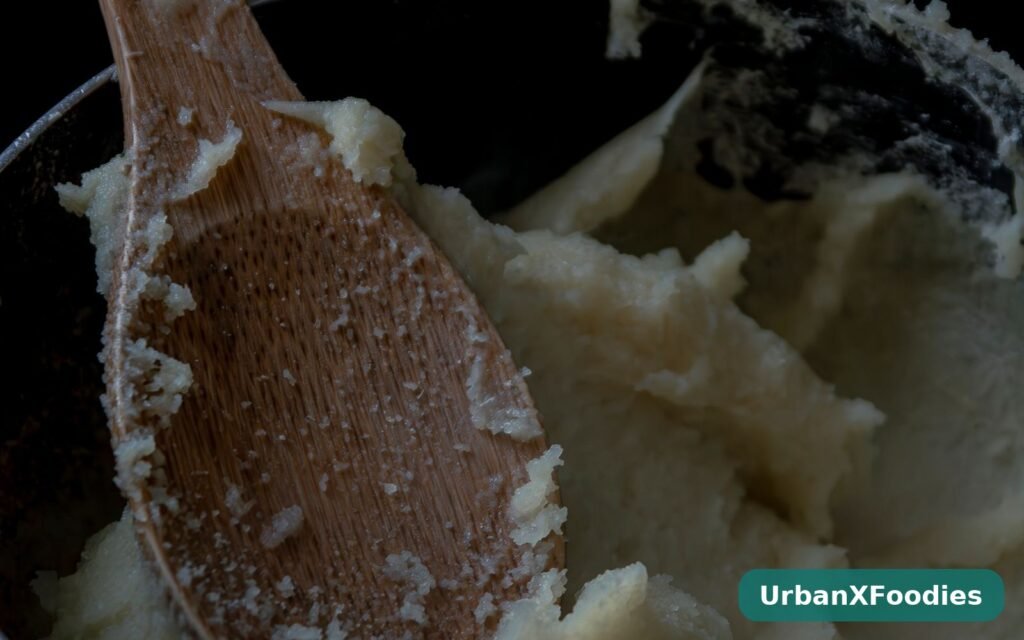
Drain the potatoes well, then return them to the hot, empty pot for a minute or two, shaking gently over low heat, to steam off any remaining water. Dry potatoes absorb butter and milk far better than wet ones, and this short step makes a real difference to the final texture. While the potatoes are still hot, squeeze the roasted garlic cloves out of their skins straight into the pot: they should slip out easily, like soft paste. Add the butter and let it melt into the hot potatoes, then mash with a potato masher or a ricer until smooth. A ricer gives the silkiest result, but a masher works well too, as long as you do not overwork the potatoes.
Pour in the warm milk a little at a time, mashing or stirring gently between additions, until the potatoes reach the consistency you like. Some people prefer a thick, spoonable mash, others like it looser and creamier, and both are correct, so stop when it looks right to you. Season with salt and pepper, taste, and adjust: potatoes need more salt than you think, and under-seasoned mash is the second most common disappointment after lumps. Serve immediately, with an extra knob of butter melting on top and a scattering of chives or parsley if you like. If you enjoy potatoes in all their forms, the crispy potatoes without breadcrumbs use the same floury varieties to a completely different, crunchy end.
- Step 1: Roast the garlic head at 200°C (400°F) for 35 to 40 minutes until soft and golden.
- Step 2: Boil the potatoes in salted water for 15 to 20 minutes until completely tender.
- Step 3: Drain, steam dry in the hot pot, and squeeze in the roasted garlic.
- Step 4: Add the butter, mash gently, then stir in warm milk a little at a time.
- Step 5: Season well, taste, and serve with extra butter and fresh herbs.
If you are short on time, you can roast the garlic a day ahead and keep it in the fridge, or use a shortcut: simmer peeled garlic cloves gently in milk for 15 minutes until soft, then mash them into the potatoes with the milk. The flavour will be milder and less caramelised than roasted garlic, but it is still a big improvement over raw garlic, and it saves you turning the oven on.
Tips
The most important rule in mashed potatoes is not to overwork them. Potatoes contain starch, and when you beat or process them too vigorously, that starch turns gluey and sticky, which is how good mash becomes wallpaper paste. Mash gently, by hand, and stop as soon as the potatoes are smooth. Never use a food processor or a blender for mash, no matter how tempting it looks, because the high speed breaks down the starch completely and the result is almost impossible to rescue. A ricer is the safest tool for a silky texture, since it pushes the potatoes through small holes without beating them, but a simple masher used with a light hand works well too.
The second rule is temperature. Everything should be hot or warm when it comes together: hot potatoes, melted butter, and warm milk. Cold milk cools the potatoes, makes the butter seize, and gives you a stiff, lumpy mash that no amount of stirring will fix. Warm the milk in a small pan or in the microwave until it is hot to the touch but not boiling, and add it gradually so you can control the consistency. If your mash does turn out a little stiff, a splash more warm milk and a knob of butter, stirred in gently, will usually bring it back.
The third rule is seasoning. Potatoes are bland on their own, and they need a generous amount of salt to taste like anything at all. Salt the cooking water well, then season again after mashing, and taste before serving, since it is easy to under-season and hard to over-season at this stage. A similar attention to gentle handling and warm dairy is what makes the garlic mashed potatoes from Taste of Home so reliable, and it is a reassuring read if you want a second opinion on the method.
Variations to Try
Once you have the basic method, it is easy to change the character of the mash without changing the work. For a cheesy version, stir in a large handful of grated mature Cheddar or Parmesan at the end, letting it melt into the hot potatoes, and finish with a little extra cheese on top. For a herby version, stir in chopped chives, parsley, and a little dill, which gives the mash a fresh, green note that works beautifully with fish. For a richer holiday version, replace half the milk with warm double cream, and add an extra knob of butter, which gives you the kind of mash that people remember long after the meal.
For a lighter version, replace half the potatoes with steamed cauliflower, mashed in the same way, which keeps the creamy texture while cutting the richness. It is a useful trick if you want the comfort of mash with a little less heaviness, and the roasted garlic still gives it plenty of flavour. For a mustard mash, stir in a tablespoon of wholegrain mustard at the end, which pairs especially well with sausages and roast pork. And for a spring version, fold in a handful of peas and some chopped mint just before serving, which turns a winter comfort dish into something bright and seasonal. If you want a crunchy potato dish on the same table for contrast, a tray of crispy roast potatoes is the obvious partner, though you may find the mash gets eaten first.
If you want to turn leftover mash into something new, shape it into small patties, coat lightly in flour, and fry in butter until golden on both sides. These potato cakes are excellent with a fried egg for breakfast, or with a green salad for lunch, and they are a far better fate for leftovers than simply reheating the same bowl again.
Serving Ideas
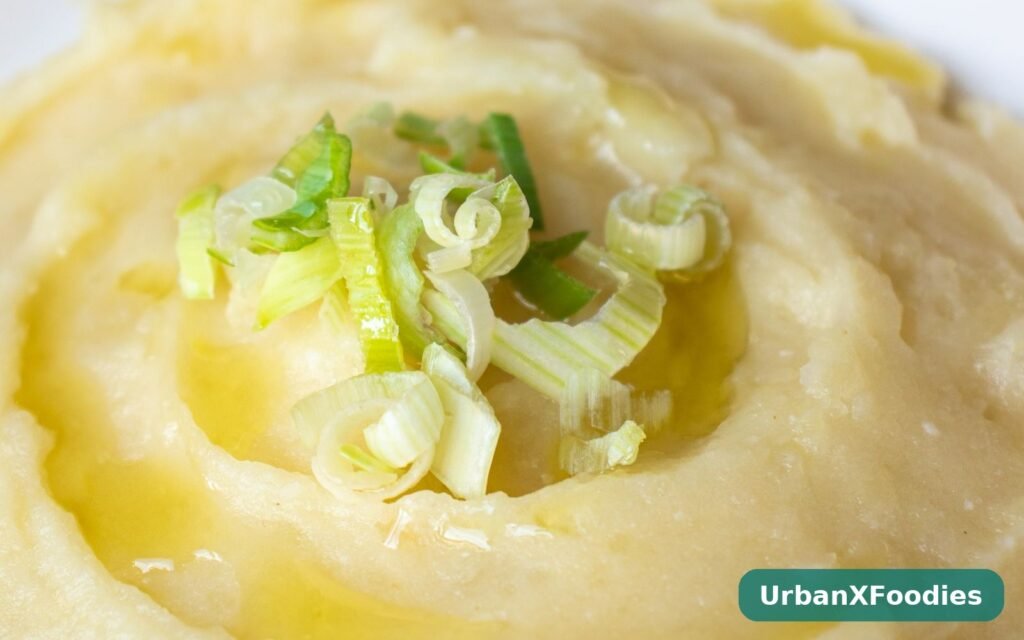
Mashed potatoes go with almost any main course that has a sauce or gravy, which is part of why they are so beloved. With roast chicken and gravy, they are the classic Sunday side, soaking up every drop. With sausages and onion gravy, they are the foundation of a proper bangers and mash, and the roasted garlic in the potatoes echoes the savoury flavours of the sausages. With a beef stew or a slow-cooked casserole, they are the perfect bed for the rich sauce, and with grilled fish and a green salad, they make a lighter dinner feel substantial and comforting.
For a holiday table, pile the mash into a warm serving bowl, make a swirl on top with the back of a spoon, and put a generous knob of butter in the centre so it melts into a golden pool. Scatter over fresh herbs, and let people help themselves. For a weeknight dinner, serve the mash straight from the pot with a simple main and a vegetable side, and dinner is done with very little fuss. A spoonful of wholegrain mustard or a drizzle of good olive oil on top is a nice finishing touch, especially with the plainer mains. On a night when the whole meal needs to feel this comforting, the chicken skillet recipes without oven make a natural partner, since their pan sauce loves a bed of mash. For a busy-night meal built on the same low-effort spirit, the easy dinner recipes with frozen vegetables pair well on the same table.
Storage and Make-Ahead
Leftover mashed potatoes keep in the fridge for three to four days in a sealed container, and they reheat well if you do it gently. To reheat, put them in a pan over low heat with a splash of warm milk and a knob of butter, and stir until hot and creamy again, adding more milk as needed. The microwave works too, in short bursts with a stir between each one, but the stovetop gives you more control and a smoother result. Do not reheat mash more than once, and do not leave it sitting at room temperature for long, since dairy-based dishes spoil faster than plain vegetables.
You can make the mash a day ahead, which is a genuine blessing on a busy holiday. Cook it fully, cool it quickly, and refrigerate it in a sealed container, then reheat it gently with extra warm milk and butter, stirring until it is smooth and hot. Some people swear by making mash ahead this way, since the flavours have time to settle and the reheating with fresh butter makes it taste just made. For freezing, cool the mash completely, portion it into freezer bags or containers, and freeze for up to three months. Thaw overnight in the fridge, then reheat gently with milk and butter, and it will be very close to freshly made, though slightly softer in texture.
Frequently Asked Questions
Why are my mashed potatoes gluey?
Gluey mash is almost always caused by overworking the potatoes, especially with a food processor, blender, or electric mixer, which breaks down the starch completely. Mash gently by hand, with a masher or ricer, and stop as soon as the potatoes are smooth. Using waxy potatoes instead of floury ones can also contribute, since waxy varieties do not break down as cleanly.
What type of potato is best for mashing?
Floury potatoes are best: russets, King Edwards, Maris Pipers, or any variety sold for mashing or baking. They break down into a fluffy, smooth mash, while waxy potatoes, sold for salads, hold their shape and can turn sticky if mashed too much. If you are unsure, look for potatoes labelled for mashing, or ask at the shop.
Can I make mashed potatoes without a ricer?
Yes, absolutely. A simple potato masher works well, as long as you mash gently and do not overwork the potatoes. A fork works for a small batch, though it takes longer and the result will be a little more rustic. A ricer gives the silkiest texture, but it is not essential, and many excellent mashes have been made with nothing more than a masher and a little patience.
How do I keep mashed potatoes warm for a crowd?
Put the finished mash in a heatproof bowl over a pan of barely simmering water, cover with a lid or foil, and stir occasionally, adding a splash of warm milk if it stiffens. It will hold happily for thirty to forty minutes this way. A slow cooker on the warm setting, with a little extra butter on top, also works well for a larger gathering.
Can I roast the garlic in advance?
Yes, and it is a useful shortcut. Roast the garlic up to three days ahead, squeeze the cloves into a small container, and refrigerate. Bring it to room temperature before mashing it into the hot potatoes, so it does not cool the mash down. You can also freeze roasted garlic in small portions for up to three months, which makes this recipe even quicker on a busy night.
Why does my mash taste bland?
Potatoes need a lot of salt, and under-seasoning is the most common reason mash tastes flat. Salt the cooking water generously, season again after mashing, and taste before serving. Using good butter and warm whole milk also helps, since fat carries flavour, and the roasted garlic in this recipe adds a depth that plain mash often lacks.