
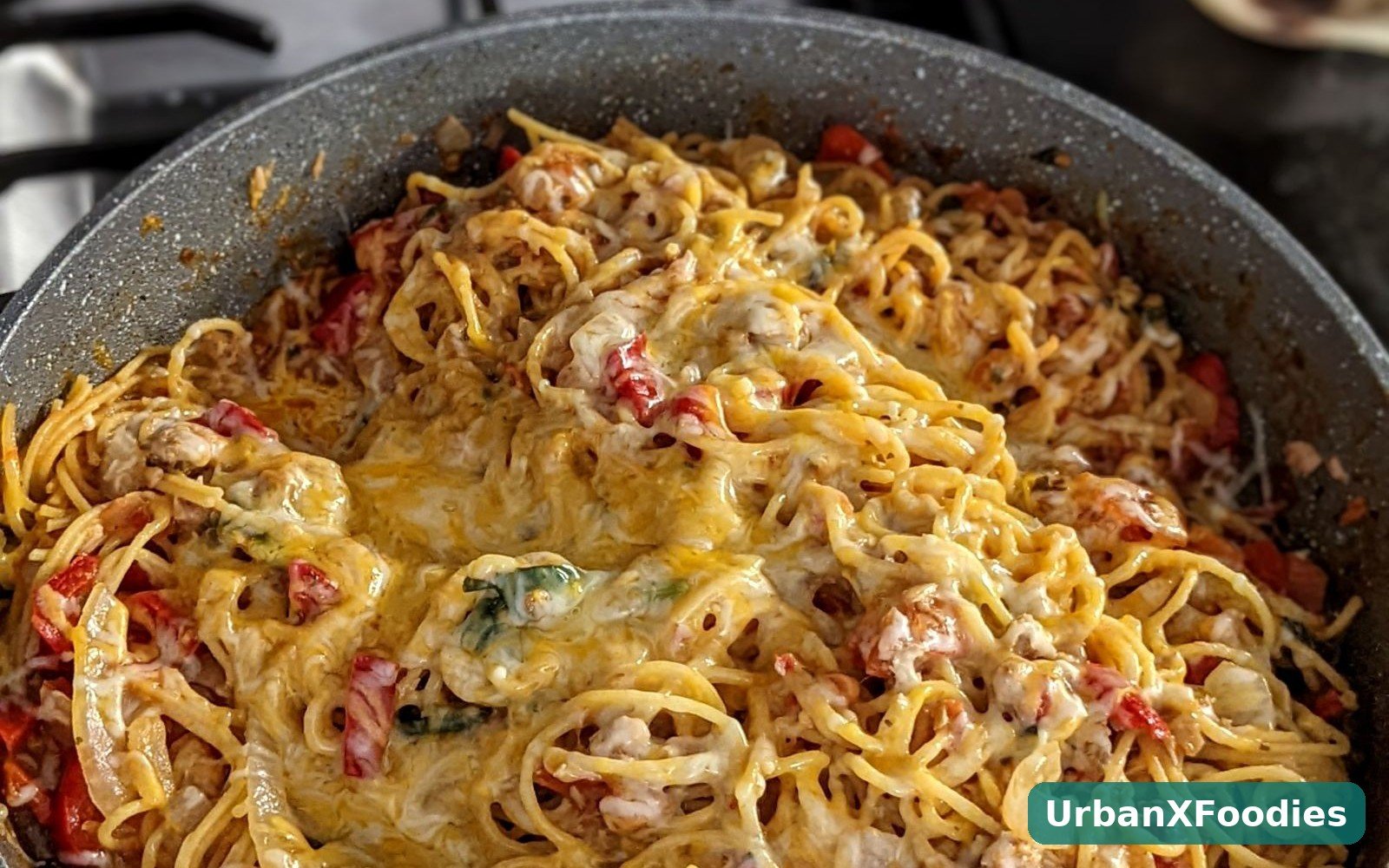
There are evenings when dinner needs to happen fast, taste like you meant it, and leave you with exactly one pan to wash. This is that dinner. Sausage and pepper pasta has been a fixture in my kitchen for years, not because it is fancy, but because it never lets me down. The sausage brings its own seasoning, the peppers turn sweet and soft in the pan, and the pasta cooks right in the sauce, soaking up every bit of flavour along the way.
I first started making a version of this on nights when the fridge looked uninspiring: a pack of sausages, two peppers, a tin of tomatoes, and a box of penne. Nothing special on its own, but together, with a little garlic and a good pinch of chilli, it turned into something my family actually asked for again. That is the test I apply to every weeknight recipe now. If nobody asks for it a second time, it does not stay in the rotation. This one passed years ago and has never left.
The real trick here is letting the pasta cook in the sauce rather than in a separate pot of water. It sounds like a small change, but it transforms the dish. The starch from the pasta thickens the sauce naturally, so you end up with something glossy and rich that clings to every piece of penne, instead of a thin sauce sliding off the side. One pan, thirty minutes, and a dinner that tastes like a Sunday supper on a Tuesday night.
Why You Will Love This Recipe
First, it is genuinely a one-pan meal. There is no second pot for the pasta, no colander, no extra board covered in bowls. Everything happens in a single large skillet, from browning the sausage to the final shower of Parmesan. On nights when the washing up feels like a second shift, that alone is reason enough to make it.
Second, it is fast without tasting rushed. The whole thing comes together in about thirty minutes, and most of that is hands-off simmering while you set the table or throw together a salad. The sausage does a lot of the heavy lifting flavour-wise, so you do not need a long ingredient list or complicated technique to get a deep, savoury result.
Third, it is endlessly forgiving. Use whatever peppers you have, swap the penne for rigatoni or fusilli, add a handful of spinach at the end, or leave the chilli out for younger eaters. The method stays the same and the dinner still works. If you are building a collection of dependable one-pan meals, this belongs right alongside other one-pan skillet recipes that keep busy evenings simple.
Ingredients You Will Need
For four generous servings, you will need:
- 450g Italian sausage, sweet or hot, casings removed
- 1 tablespoon olive oil
- 1 onion, thinly sliced
- 2 bell peppers, one red and one yellow, sliced into strips
- 3 cloves of garlic, finely chopped
- 1 teaspoon dried Italian seasoning
- 1/2 teaspoon chilli flakes (optional)
- 1 tin (400g) chopped tomatoes
- 500ml chicken stock
- 300g penne or rigatoni
- 1 tablespoon tomato paste
- Salt and freshly ground black pepper
- A large handful of grated Parmesan and fresh basil, to serve
A word about the sausage, because it makes the dish. Italian sausage is seasoned with fennel and garlic, and that seasoning perfumes the whole pan as it browns. Sweet Italian sausage keeps the dish mellow and family-friendly, while hot Italian sausage gives it a gentle warmth that builds as you eat. If you want to know more about what goes into it, the Wikipedia page on Italian sausage is a good read. Either way, buy the best quality you can find, since there is nowhere for a bland sausage to hide in a recipe this simple.
The peppers matter too. Red and yellow peppers are sweeter than green ones and they soften beautifully in the sauce, but green peppers work if that is what you have — they just bring a slightly sharper, more savoury edge. Bell peppers vary a lot in sweetness depending on colour and ripeness, so taste a strip raw if you are unsure; if it is sweet and crisp, it will be lovely cooked down in this sauce.
How to Make One-Pan Sausage and Pepper Pasta
Heat the olive oil in a large, deep skillet over medium-high heat. Squeeze the sausage meat out of its casings straight into the pan and break it up with a wooden spoon into rough, bite-sized pieces. Cook for six to eight minutes, stirring occasionally, until it is well browned in places. Do not worry about cooking it through completely at this stage; it will finish in the sauce. The browning is what builds flavour, so let it sit undisturbed for a minute or two between stirs to develop some real colour.
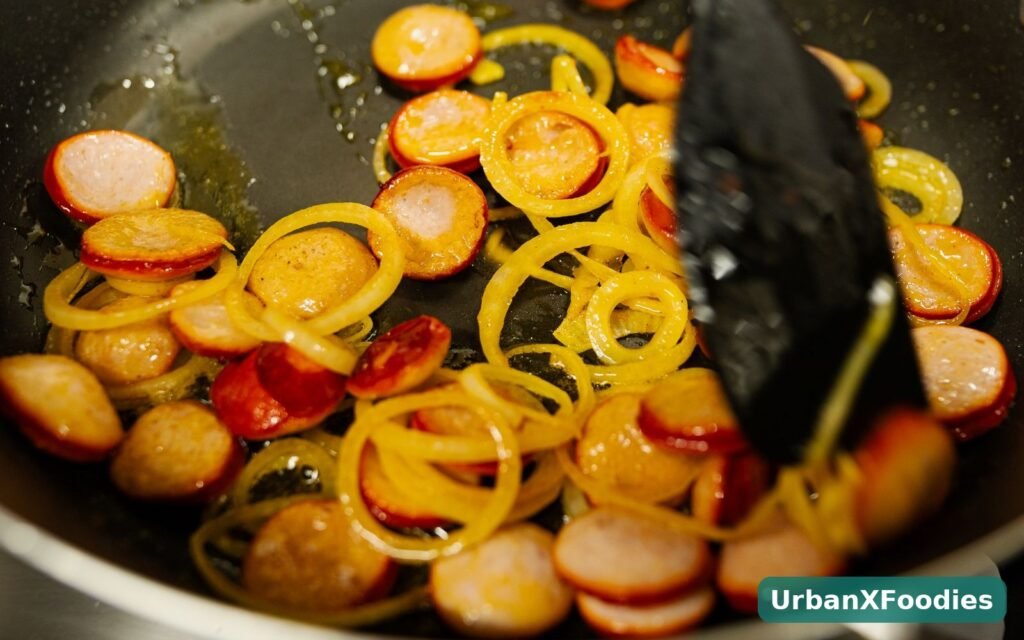
Add the sliced onion and peppers to the pan and cook for five minutes, stirring now and then, until the onion softens and the peppers begin to wilt at the edges. They will pick up the browned bits left by the sausage, which is exactly what you want. Stir in the garlic, Italian seasoning, and chilli flakes, and cook for thirty seconds until fragrant. Then add the tomato paste and cook for another minute, stirring it through the sausage and vegetables until it darkens slightly. This short step takes the raw edge off the paste and deepens the whole sauce.
Pour in the chopped tomatoes and the chicken stock, scraping the bottom of the pan to lift up anything stuck there. Bring it to a gentle simmer, season with a good pinch of salt and plenty of black pepper, and then tip in the dry penne. Stir well so the pasta is submerged, put the lid on, and turn the heat down to medium-low. Cook for twelve to fourteen minutes, stirring every few minutes so the pasta does not stick to the bottom, until the penne is just tender and the sauce has thickened around it. If the sauce gets too thick before the pasta is done, add a splash of hot stock or water.
Take the pan off the heat and let it rest, lidded, for two minutes. The pasta will absorb the last of the sauce and the whole dish will settle into that glossy, clinging consistency you are after. Taste and adjust the seasoning — sausage varies in saltiness, so this is worth doing properly. Serve straight from the pan with a generous amount of grated Parmesan and torn basil over the top. This method is a close cousin of other skillet dinners like an easy chicken and rice skillet, where one pan and a lid do most of the work for you.
Tips
Do not crowd the sausage when you brown it. If the pieces are piled on top of each other, they steam instead of browning, and you lose the deep savoury flavour that carries the dish. Use the widest skillet you own, and if your pan is small, brown the sausage in two batches. It takes a few extra minutes but the difference is real.
Stir the pasta regularly while it simmers. Pasta cooked in sauce is more likely to catch on the bottom than pasta cooked in a big pot of water, especially in the last few minutes when the sauce thickens. A quick stir every three or four minutes is enough. Keep the heat at a gentle simmer rather than a rolling boil, or the sauce will reduce too fast and the pasta will be underdone in the middle.
Taste the sauce before you serve, not before the pasta goes in. The pasta absorbs salt as it cooks, so a sauce that tastes perfect at the start can taste flat at the end. A final pinch of salt, a grind of pepper, and a squeeze of lemon if you have one will wake everything up. And if the finished dish feels a little rich, a handful of baby spinach stirred through at the end wilts in seconds and lightens the whole pan.
Variations to Try
For a creamy version, stir 100ml of double cream and a handful of grated mozzarella through the finished pasta, then put the lid back on for two minutes until the cheese melts into the sauce. It turns the dish into something closer to a baked pasta, without ever turning the oven on. For a spicier take, use hot Italian sausage, add an extra pinch of chilli flakes, and finish with a drizzle of chilli oil.
Vegetables swap in easily here. Mushrooms cooked with the peppers add an earthy depth, courgettes sliced into half-moons soften nicely in the sauce, and a tin of chickpeas stirred in with the tomatoes makes the dish heartier and stretches it to feed six. Frozen vegetables are useful too; they can go straight in from the freezer, and easy meals with frozen vegetables show how well that shortcut works across all kinds of weeknight cooking.
If you want to make it lighter, use chicken or turkey sausage instead of pork, and swap half the penne for extra peppers and a tin of white beans. The method does not change at all. And for a smoky twist, add a teaspoon of smoked paprika with the Italian seasoning and finish with a scattering of chopped parsley instead of basil. Small changes, same reliable dinner.
Serving Ideas
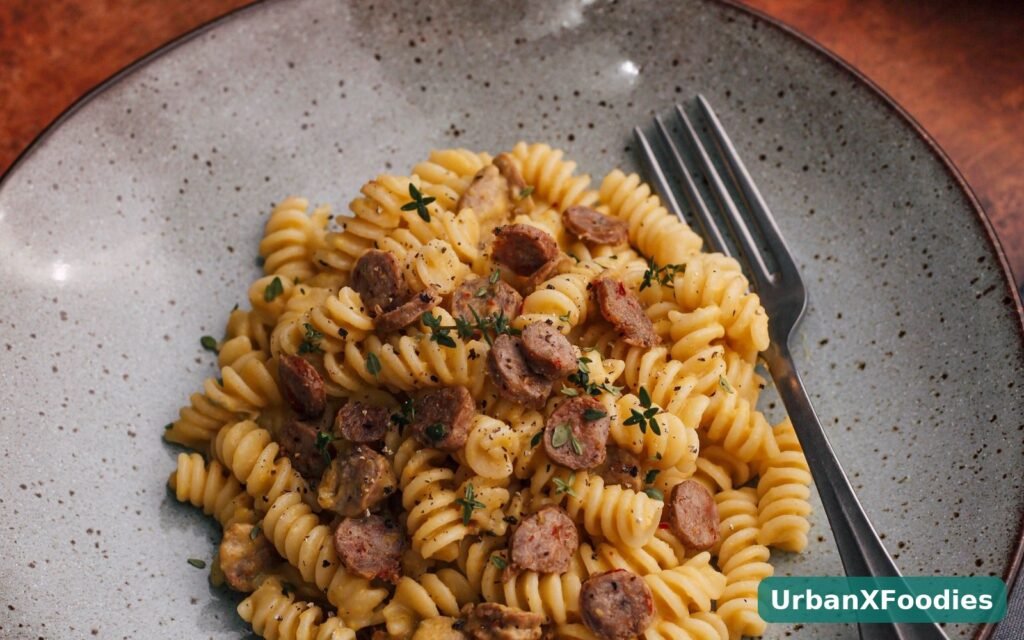
This pasta is a complete meal straight from the pan, but a few simple sides make it feel like more of an occasion. Warm garlic bread is the obvious partner, perfect for scooping up the sauce left on the plate. A crisp green salad with a sharp lemon dressing cuts through the richness nicely, and a bowl of olives or some pickled peppers on the table adds a tangy contrast that works particularly well with the sausage.
For a bigger spread, serve it alongside roasted vegetables — aubergine, courgettes, or a tray of cherry tomatoes roasted until they burst — and let people help themselves family-style from the pan in the middle of the table. It stays hot for a good while, which is handy when everyone eats at slightly different times. If you are cooking for a crowd, the recipe doubles easily in a very large skillet or a wide shallow pot, and it tastes just as good made an hour ahead and gently reheated. Like other chicken skillet recipes without an oven, it is the kind of stovetop cooking that suits a busy house.
Storage and Make-Ahead
Leftovers keep in the fridge for up to three days in an airtight container. Reheat gently in a covered pan over low heat with a splash of water or stock, stirring occasionally, until piping hot throughout. The pasta will have absorbed some sauce overnight, so the splash of liquid is important to bring it back to life. It also reheats well in the microwave in a covered dish, stirred halfway through.
This dish freezes surprisingly well for up to two months, though the pasta softens slightly on reheating, so if you plan to freeze a batch, cook the pasta a minute less than tender. Portion it into containers, cool completely, and defrost overnight in the fridge before reheating. You can also prep ahead: brown the sausage with the peppers and onions, cool, and refrigerate for up to two days, then reheat the mixture, add the tomatoes, stock, and pasta, and finish the dish fresh in about fifteen minutes.
Frequently Asked Questions
Can I use pre-sliced sausage instead of loose sausage meat?
Yes, absolutely. Slice links into rounds and brown them the same way, cut-side down, so they get good colour. The only difference is that loose sausage meat breaks into smaller crumbles that mix through the pasta more evenly, while sliced sausage gives you distinct, meaty pieces. Both are delicious, so use whichever you have.
What if I do not have a lid for my skillet?
A tight lid matters because it keeps the steam in and cooks the pasta evenly. If you do not have one, cover the pan tightly with a double layer of foil, crimped well around the edges, and place a baking tray on top for extra weight. It works well as a substitute, though you may need an extra minute or two of cooking time.
Can I make this with gluten-free pasta?
Yes, but watch it closely. Gluten-free pasta tends to cook faster and can turn mushy in sauce, so start checking it two minutes earlier than the packet suggests and take the pan off the heat as soon as it is just tender. You may also need a little extra stock, since some gluten-free pastas absorb more liquid.
How do I stop the pasta from sticking to the pan?
Stir every few minutes, keep the heat at a gentle simmer, and make sure the pasta is submerged in liquid at the start. A well-seasoned or non-stick skillet helps too. If it does catch slightly, do not scrape aggressively — just stir in a splash of hot stock and the stuck bits will usually release on their own.
Can I add cheese into the sauce instead of just on top?
Definitely. A handful of grated mozzarella or a spoonful of mascarpone stirred through at the end melts into the sauce and makes it richer and creamier. Add it off the heat so it melts gently rather than going stringy, and save a little Parmesan for scattering over each bowl at the table.


