

There are some dinners that taste like sunshine, and this is one of them. Lemon herb chicken orzo is bright without being sharp, creamy without being heavy, and comforting in the way only a one-pan pasta can be. Golden chicken, tiny rice-shaped pasta cooked right in the pan, a sauce that is buttery and lemony and just rich enough, and a tangle of spinach and Parmesan to finish. It is the dinner I make when I want something that feels fresh and light but still properly satisfying.
I first came across orzo years ago in a small deli, where it was served cold in a salad with lemon and herbs, and I remember thinking it was rice until someone corrected me. Orzo is actually pasta, shaped like a large grain of rice, and it cooks in about half the time of most pasta shapes. That makes it perfect for a skillet dinner, because it simmers in the sauce and absorbs all the flavour from the chicken stock, the lemon, and the garlic, turning creamy and tender in about ten minutes. Once I started cooking it this way, hot and saucy straight from the pan, I never went back to the cold salad version.
The lemon here is doing more work than you might think. It brightens the richness of the butter and Parmesan, it lifts the chicken, and it makes the whole dish taste fresh rather than stodgy. But the trick is balance: enough lemon to make the dish sing, not so much that it turns sour. A little zest, a modest squeeze of juice, and a final adjustment at the end, once you can taste the finished dish, is the way to get it right every time.
Why You Will Love This Recipe
It is a complete meal in one pan. Chicken, pasta, and greens all cook together, so there is no second pot, no colander, and no pile of bowls to wash. On evenings when you want dinner to be simple from start to finish, that counts for a lot.
It is ready in about thirty-five minutes, and most of that is gentle simmering while you do something else. The orzo cooks fast, the chicken finishes in the sauce, and the whole dish comes together with very little active work. It is the kind of recipe you can cook while half-listening to the news or helping with homework, which is exactly what a weeknight dinner should allow.
It is also bright and versatile in a way that heavier pasta dishes are not. The lemon and herbs make it feel fresh even in winter, and it works just as well for a casual family dinner as it does for friends. If you are collecting dependable one-pan skillet recipes for your rotation, this is the one that will surprise you with how often you reach for it.
Ingredients You Will Need
For four servings, you will need:
- 600g boneless, skinless chicken thighs, or 4 chicken breasts cut into chunks
- Salt and freshly ground black pepper
- 1 teaspoon dried oregano
- 2 tablespoons olive oil
- 1 tablespoon butter
- 1 onion, finely chopped
- 3 cloves of garlic, finely chopped
- 300g orzo pasta
- 700ml hot chicken stock
- Zest of 1 lemon, plus 2 tablespoons lemon juice
- 100g baby spinach
- 50g Parmesan, finely grated, plus extra to serve
- 2 tablespoons double cream (optional, for extra richness)
- Fresh parsley and dill, chopped, to serve
- Lemon wedges, to serve
A note on the orzo, because it behaves differently from other pasta. Orzo is small and dense, so it releases a lot of starch as it cooks, which is what makes the sauce creamy without much cream at all. That is a gift, but it also means you need to stir it more often than you would penne, or it will settle and stick to the bottom of the pan. Orzo looks like rice but cooks like pasta, and once you know how it behaves, it becomes one of the most useful shapes in the cupboard.
The lemon matters too. Use a fresh lemon, not bottled juice, because the zest is where most of the fragrance lives and bottled juice has none of it. Lemons vary a lot in juiciness, so start with the zest and one tablespoon of juice, taste the finished dish, and add the second tablespoon only if it needs it. You can always add more lemon, but you cannot take it back.
How to Make Lemon Herb Chicken Orzo Skillet
Season the chicken generously with salt, pepper, and the dried oregano. Heat the olive oil in a large, deep skillet over medium-high heat. When the oil shimmers, add the chicken in a single layer and cook for four to five minutes on each side until golden. You are building colour and flavour here, not cooking it through completely; it will finish in the orzo. Transfer the chicken to a plate and set it aside, along with any juices.

Turn the heat down to medium and add the butter to the same pan. When it foams, add the onion and cook for four minutes, stirring occasionally, until softened and just starting to colour. Add the garlic and cook for thirty seconds until fragrant, then stir in the orzo and cook for a minute, stirring, so every grain gets coated in the butter and picks up a lightly toasted flavour. This toasting step gives the finished dish a subtle nuttiness that is easy to miss but hard to forget once you have tasted it.
Pour in the hot chicken stock, scraping the bottom of the pan to lift up the browned bits, and bring everything to a gentle simmer. Stir in the lemon zest and one tablespoon of the lemon juice. Nestle the chicken pieces back into the orzo, along with any juices from the plate, and spoon a little orzo over the top of each piece. Put the lid on, turn the heat down to low, and cook for ten to twelve minutes, stirring once or twice, until the orzo is tender and the sauce has thickened to a creamy consistency. If the orzo absorbs the liquid before it is tender, add a splash of hot stock.
Take the pan off the heat and stir in the spinach a handful at a time until it wilts into the orzo, which takes about a minute. Stir in the Parmesan and the cream if you are using it, and taste. This is the moment to adjust: a little more lemon juice if it needs brightness, a pinch more salt if it tastes flat, a grind of pepper for warmth. Scatter over the chopped parsley and dill, and serve straight from the pan with lemon wedges on the side. It follows the same one-pan logic as an easy chicken and rice skillet, where the grain cooks in the sauce and picks up every bit of flavour from the pan.
Tips
Stir the orzo while it simmers. Orzo is small and starchy, so it sinks and sticks more readily than larger pasta shapes. A gentle stir every three or four minutes is enough to keep it moving and to make sure it cooks evenly. If you forget and it catches, do not panic — stir in a splash of hot stock and the stuck bits will usually release, and the sauce will still be delicious.
Do not add all the lemon juice at the start. Lemon juice cooked for a long time loses its brightness and can turn slightly bitter, while zest added early perfumes the dish gently as it simmers. Add half the juice with the stock, then taste at the end and add the rest if the dish needs lifting. This two-stage approach gives you a lemon flavour that is both deep and fresh.
Use chicken thighs if you can. They stay juicy during the simmer and they forgive a few extra minutes on the heat, which makes the whole dish more relaxed to cook. Breasts work well too, but cut them into generous chunks and be careful not to overcook them; they finish cooking in the orzo, so they do not need to be fully done when you set them aside. And always let the dish rest for two minutes before serving — the orzo thickens slightly as it cools, and the sauce settles into that perfect creamy consistency.
Variations to Try
For a Mediterranean version, add a tin of chickpeas with the stock, a handful of olives, and a crumbling of feta at the end, with extra lemon zest and oregano. For a richer, more indulgent take, stir in an extra splash of cream and a handful of grated mozzarella, and finish with a drizzle of good olive oil. For a spring version, add a handful of peas and some asparagus tips in the last five minutes of cooking, and finish with mint instead of dill.
Vegetables swap in easily. Mushrooms cooked with the onion add earthiness, courgettes diced small soften nicely in the orzo, and roasted red peppers from a jar, sliced into strips, add sweetness and colour. If you have leftover cooked chicken, this recipe adapts beautifully: skip the browning step, add the shredded chicken to the orzo for the last five minutes so it heats through without drying out, and you have dinner in about twenty minutes. Easy meals with leftover chicken breast offer more ways to turn yesterday’s chicken into today’s dinner without waste.
You can also change the herbs to suit the season. Basil in summer, parsley and dill in spring, and a little thyme or rosemary in winter all work well, as long as you add soft herbs at the end and woody herbs earlier with the stock. Small changes like this keep a reliable recipe feeling fresh, even when you cook it every other week.
Serving Ideas
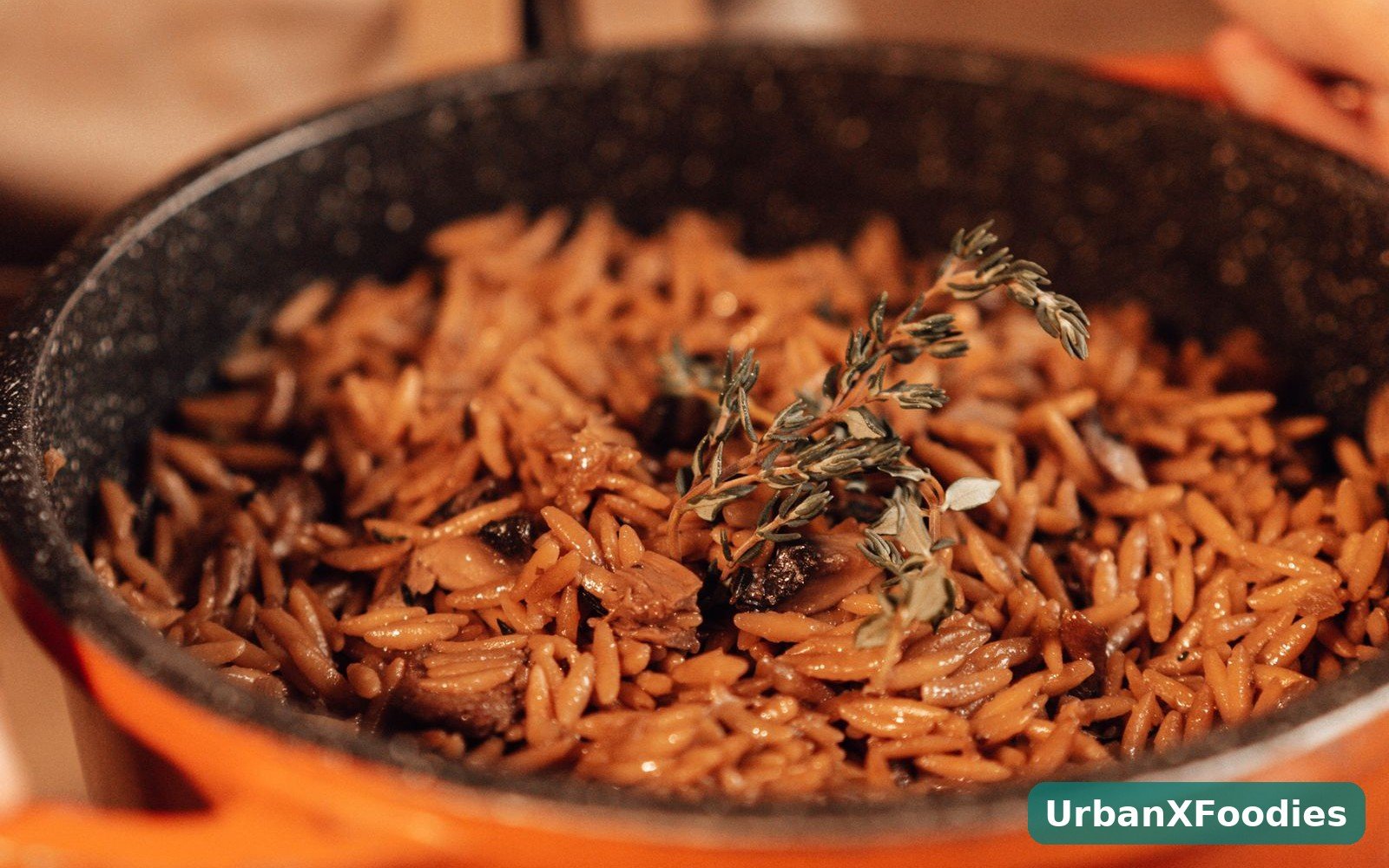
This skillet is a complete meal on its own, but a few simple additions make it feel more generous. Warm flatbreads or crusty bread are useful for scooping up the creamy orzo, and a crisp green salad with a lemon dressing echoes the brightness of the dish without competing with it. A bowl of olives or some pickled vegetables on the side adds a tangy contrast that works particularly well with the lemon.
For a more substantial spread, serve it with roasted vegetables — cherry tomatoes roasted until they burst, or a tray of courgettes and aubergine with garlic — and a big bowl of salad. The skillet itself looks wonderful brought to the table in the pan, garnished with herbs and lemon wedges, and it stays warm for a good while, which is helpful when people eat at slightly different times. Among chicken recipes for busy nights, this is one of the prettiest to serve family-style.
If you are cooking for a smaller table, the recipe halves easily in a medium skillet, and it is just as good the next day, gently reheated with a splash of stock. For a dinner with friends, double it in a very large pan and serve it in the middle of the table with extra Parmesan and lemon wedges for people to help themselves.
Storage and Make-Ahead
Leftovers keep in the fridge for up to three days in an airtight container. The orzo will absorb sauce as it sits, so reheat gently in a covered pan over low heat with a splash of stock or water, stirring occasionally, until piping hot throughout. It also reheats well in the microwave in a covered dish, stirred halfway through, though the texture will be slightly softer than when fresh.
This dish does not freeze well, because orzo turns mushy on thawing and the lemon flavour dulls. If you want to get ahead, the best approach is to prep the components: season the chicken, chop the onion and garlic, and zest the lemon in advance, and keep everything covered in the fridge. Then the whole dish comes together in about twenty-five minutes when you are ready to cook.
You can also cook the chicken and onion base ahead, cool it, and refrigerate for up to two days, then reheat it, add the orzo and stock, and finish the dish fresh. That shortens the evening cooking time considerably and makes this an even more practical weeknight option, especially on nights when you get home late and want dinner quickly.
Frequently Asked Questions
Can I use rice instead of orzo?
You can, but the cooking time and liquid change. Long-grain rice needs about twice the liquid and twenty to twenty-five minutes of covered simmering, while orzo needs only ten to twelve minutes. The method is the same — brown the chicken, cook the aromatics, add the grain and stock, and simmer with the lid on — but check the rice packet for its liquid ratio and adjust the stock accordingly.
How do I stop the orzo from sticking to the pan?
Stir it every few minutes while it simmers, keep the heat low once the lid is on, and make sure there is enough liquid at the start. A well-seasoned or non-stick skillet helps, and toasting the orzo in butter before adding the stock also reduces sticking. If it does catch, a splash of hot stock and a good stir will usually fix it.
Can I make this without cream?
Yes. The orzo releases enough starch to make the sauce creamy on its own, and the cream is entirely optional. Leave it out and you will still get a silky, glossy sauce, just a little lighter. A spoonful of mascarpone or a knob of butter stirred in at the end gives a similar richness if you want it without using cream.
Is this recipe good for meal prep?
It is good for next-day lunches, kept in the fridge for up to three days and reheated with a splash of stock. It is less suited to freezing, since orzo softens on thawing. If you want to prep for the week, cook a double batch of the chicken and sauce base, and cook fresh orzo to stir through when you are ready to eat.
What herbs work best with lemon chicken orzo?
Parsley and dill are my first choice, because they are fresh and bright without overpowering the lemon. Basil works well in summer, and a little thyme or oregano added with the stock gives a warmer, more savoury note. Avoid very strong herbs like rosemary in large amounts, since they can dominate the delicate lemon flavour.


