

There are some dinners I come back to again and again, not because they are fancy, but because they never let me down. Lemon herb baked chicken thighs is one of those dinners. It is the meal I make when the day has been long, the fridge is not particularly inspiring, and I still want something on the table that tastes like I actually tried. The chicken comes out of the oven golden and juicy, the skin crisp at the edges, and the whole kitchen smells like lemon, garlic and rosemary in the best possible way.
What I love most about this recipe is how little fuss it involves. You mix a simple marinade, pour it over the chicken, and let the oven do the heavy lifting. There is no standing over a pan, no complicated sauce to babysit, and no pile of washing up at the end. While the chicken bakes, you have time to set the table, throw together a salad, or simply sit down for ten minutes. That is a rare gift on a busy weeknight, and it is why this dish has earned a permanent spot in my rotation.
Chicken thighs are the real hero here. Unlike chicken breast, which can dry out if you look at it for a second too long, thighs are forgiving. They have a little more fat, which keeps them moist and flavoursome even if they spend a few extra minutes in the oven. Bone-in, skin-on thighs give you the best result of all, because the bone helps the meat cook evenly and the skin turns beautifully crisp. If you only have boneless thighs, though, do not worry — the recipe still works wonderfully, you will just need a slightly shorter cooking time.
The lemon and herb combination is simple, but it is also exactly right. Lemon brightens everything without making the dish sour, garlic adds depth, and rosemary and thyme bring that warm, savoury note that makes roast chicken taste like roast chicken. A good glug of olive oil helps the flavours cling to the meat and encourages the skin to crisp. It is not a long list of ingredients, and that is the point. When the ingredients are good and the method is sound, you do not need much else.
I first started making a version of this on Sunday evenings, when I wanted a proper dinner but did not want to spend the whole evening cooking. Over time I have tweaked it in small ways: a little more lemon zest here, a longer rest there, potatoes tucked around the chicken so they roast in the juices. Those potatoes, honestly, might be the best part. They soak up the lemony pan juices and turn golden at the edges, and nobody at the table ever leaves them behind.
If you are new to cooking chicken thighs, this is a wonderful place to start. It is hard to get wrong, easy to scale up for guests, and it teaches you the basics that carry over into so many other recipes: how to season well, how to get crisp skin, and how to tell when chicken is properly cooked. Once you have made it once, you will find yourself making it again the following week, probably with your own little changes. That is how a recipe becomes a favourite.
Why You Will Love This Recipe
First, it is genuinely easy. The active work takes about ten minutes, and most of that is chopping garlic and squeezing a lemon. The rest is oven time, which means you can get on with the rest of your evening. For anyone juggling work, family, homework and everything else, a dinner that mostly cooks itself is worth its weight in gold.
Second, it is flexible. Serve it with roast potatoes and green beans for a classic Sunday-style dinner, or with a simple salad and crusty bread when you want something lighter. It works just as well for a quiet dinner for two as it does for a table full of guests, and you can double the recipe without changing the method at all. That kind of flexibility is what turns a recipe into a regular.
Third, the flavour is bright and comforting at the same time, which is a combination that suits almost everyone. The lemon keeps it fresh rather than heavy, so it never feels like too much, even on a warm evening. Children tend to like it too, because there is nothing strange or spicy about it — just good chicken, well seasoned, with a sauce made from its own juices. If you enjoy straightforward, honest cooking, you will find plenty to love in our wider collection of chicken recipes, where simple dinners like this one are the whole point.
Finally, it is economical. Chicken thighs are usually cheaper than breasts, lemons and herbs cost very little, and the whole meal feeds four people generously. Leftovers are excellent the next day, sliced cold into a sandwich or tossed through a salad, so nothing goes to waste. Good food, little effort, sensible cost — that is a combination that is hard to argue with.
Ingredients You Will Need
For four servings, you will need:
- 8 bone-in, skin-on chicken thighs (about 1 kg)
- 3 tablespoons olive oil
- Juice of 1 large lemon, plus the zest
- 4 cloves of garlic, finely chopped or crushed
- 1 tablespoon fresh rosemary leaves, chopped (or 1 teaspoon dried)
- 1 tablespoon fresh thyme leaves (or 1 teaspoon dried)
- 1 teaspoon dried oregano
- 1 teaspoon fine sea salt
- 1/2 teaspoon black pepper
- 1 teaspoon honey (optional, but lovely for balance)
- 1 lemon, cut into wedges, for roasting alongside
- 600g baby potatoes, halved (optional, for roasting in the same tray)
- Fresh parsley, to serve
A note on the chicken: if your thighs are very large, give them a few extra minutes in the oven and always check the internal temperature. If you are using boneless thighs, reduce the baking time by about ten minutes and check them early. Skin-on is best for flavour and crispness, but skinless thighs will still taste wonderful — just spoon some of the pan juices over them when you serve.
On herbs, fresh is lovely when you have it, but dried herbs work perfectly well here. The rule of thumb is one teaspoon of dried for every tablespoon of fresh. And on lemons, do use a real lemon rather than bottled juice if you can. The zest carries so much of the flavour, and bottled juice simply cannot give you that bright, fresh note that makes this dish sing.
How to Make Lemon Herb Baked Chicken Thighs
Start by heating your oven to 200°C (400°F). While it warms up, take the chicken out of the fridge and pat the thighs dry with kitchen paper. This small step matters more than you might think: dry skin crisps, wet skin steams. Season the thighs generously on both sides with the salt and pepper, and set them aside while you make the marinade.
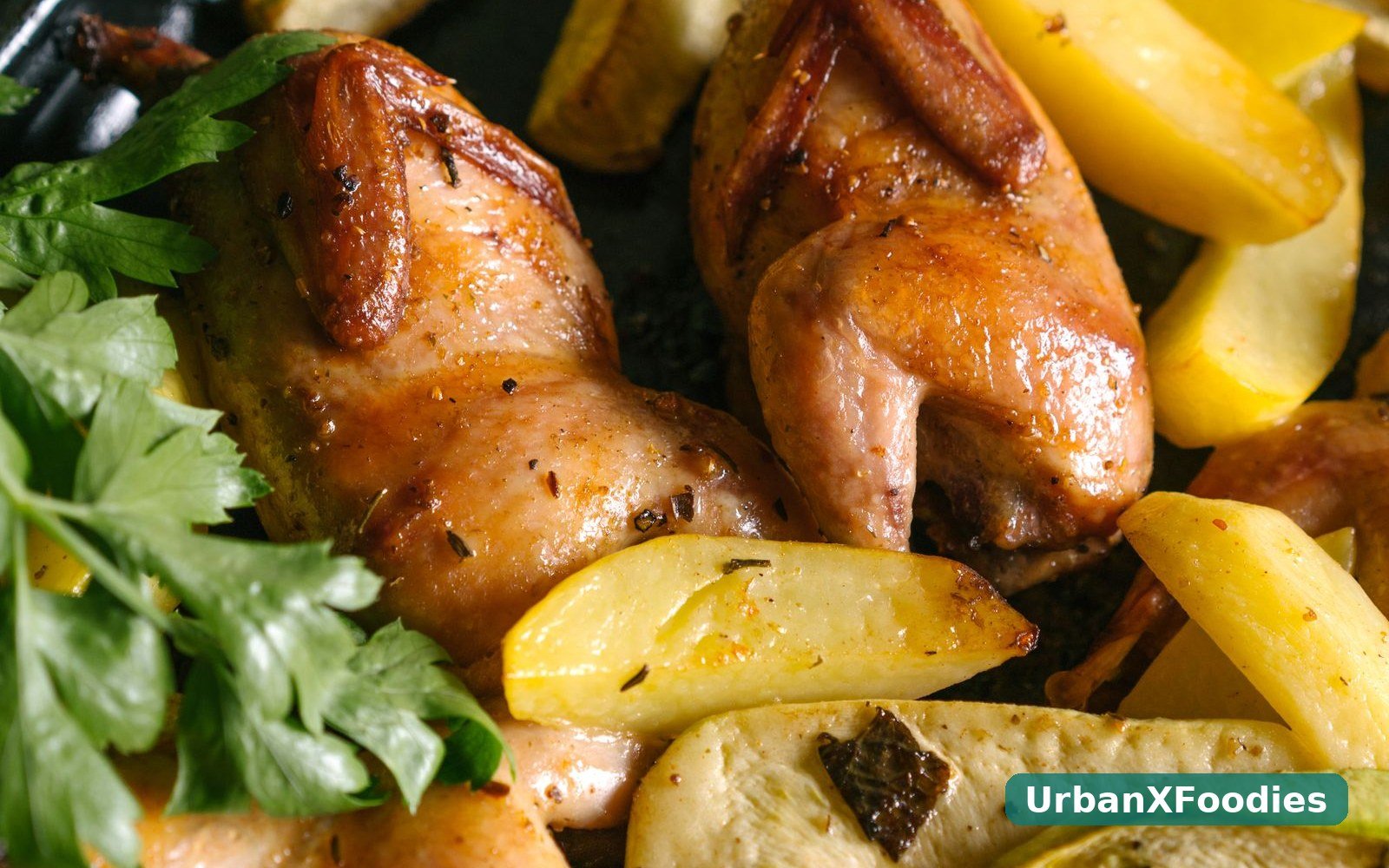
In a small bowl, whisk together the olive oil, lemon juice and zest, garlic, rosemary, thyme, oregano and honey, if you are using it. Pour most of this mixture over the chicken in a large bowl or dish, and turn the thighs so they are well coated. If you have time, leave them to marinate for twenty to thirty minutes at room temperature, or up to a few hours in the fridge. If you do not have time, do not worry — even ten minutes makes a difference, and the chicken will still be delicious roasted straight away.
If you are adding potatoes, toss the halved baby potatoes in the remaining marinade and scatter them in a large roasting tin or baking tray. Arrange the chicken thighs on top, skin side up, with a little space between each piece. Crowding the tray is the enemy of crisp skin, so use a big tray or two smaller ones if you need to. Tuck the lemon wedges in around the chicken — they will soften and caramelise in the oven, and squeezing them over the finished dish is a wonderful finishing touch.
Roast in the centre of the oven for 35 to 45 minutes, until the skin is deep golden and crisp and the chicken is cooked through. The juices should run clear when you pierce the thickest part, and a meat thermometer should read 74°C (165°F) at the thickest point, away from the bone. If the skin is not quite as crisp as you would like, pop the tray under a hot grill for two or three minutes at the end, watching it closely so it does not catch.
Take the tray out of the oven and let the chicken rest for five to ten minutes before serving. Resting lets the juices settle back into the meat instead of running out onto the plate, and it makes a real difference to how juicy the chicken tastes. Spoon some of the pan juices over the thighs, scatter with fresh parsley, and serve with the roasted potatoes and lemon wedges. For another dependable one-pan dinner, our easy chicken and rice skillet follows the same low-effort, big-flavour idea.
Tips
Pat the chicken dry before you season it. I mention this again because it is the single most reliable way to get crisp skin. Kitchen paper, a few seconds, done. It is a tiny habit that transforms the result.
Use a large tray. Chicken thighs need space for hot air to circulate around them. If they are packed in shoulder to shoulder, they will steam rather than roast, and the skin will stay pale and soft. When in doubt, use two trays.
Do not skip the rest. Five minutes of patience after the chicken comes out of the oven is the difference between juicy meat and a dry disappointment. Cover the tray loosely with foil while it rests if your kitchen is cool, but do not wrap it tightly or the skin will soften.
Check the temperature, not just the clock. Ovens vary, and thighs vary in size, so a thermometer takes the guesswork out. The safe internal temperature for chicken is 74°C (165°F), and thighs are forgiving a few degrees beyond that, so there is no need to panic if yours reads a little higher.
Save the pan juices. That lemony, garlicky liquid at the bottom of the tray is liquid gold. Spoon it over the chicken, drizzle it over the potatoes, or stir it into rice. Throwing it away would be a genuine shame.
Variations to Try
Once you know the basic recipe, it is easy to make it your own. For a Mediterranean twist, add a handful of cherry tomatoes and some olives to the tray for the last twenty minutes of cooking. They soften and burst, and their juices mingle beautifully with the lemon and herbs.
If you like a little warmth, add half a teaspoon of chilli flakes or a pinch of smoked paprika to the marinade. It will not make the dish spicy in any aggressive way, just a gentle background heat that makes the lemon taste even brighter. A teaspoon of Dijon mustard whisked into the marinade is another excellent addition — it adds depth and helps the marinade cling to the chicken.
For a herby variation, swap the rosemary and thyme for oregano and parsley, or add a handful of chopped basil at the end instead of parsley. Each herb combination gives the dish a slightly different character, and none of them is wrong. In summer, I sometimes add sliced courgettes or green beans to the tray; in winter, chunks of butternut squash or carrots roast beautifully alongside the chicken.
You can also change the citrus. Orange juice and zest, used in place of half the lemon, gives a sweeter, rounder flavour that children often prefer. Lime works too, especially if you serve the chicken with rice and a fresh salsa. The method stays exactly the same; only the flavour profile shifts.
Serving Ideas
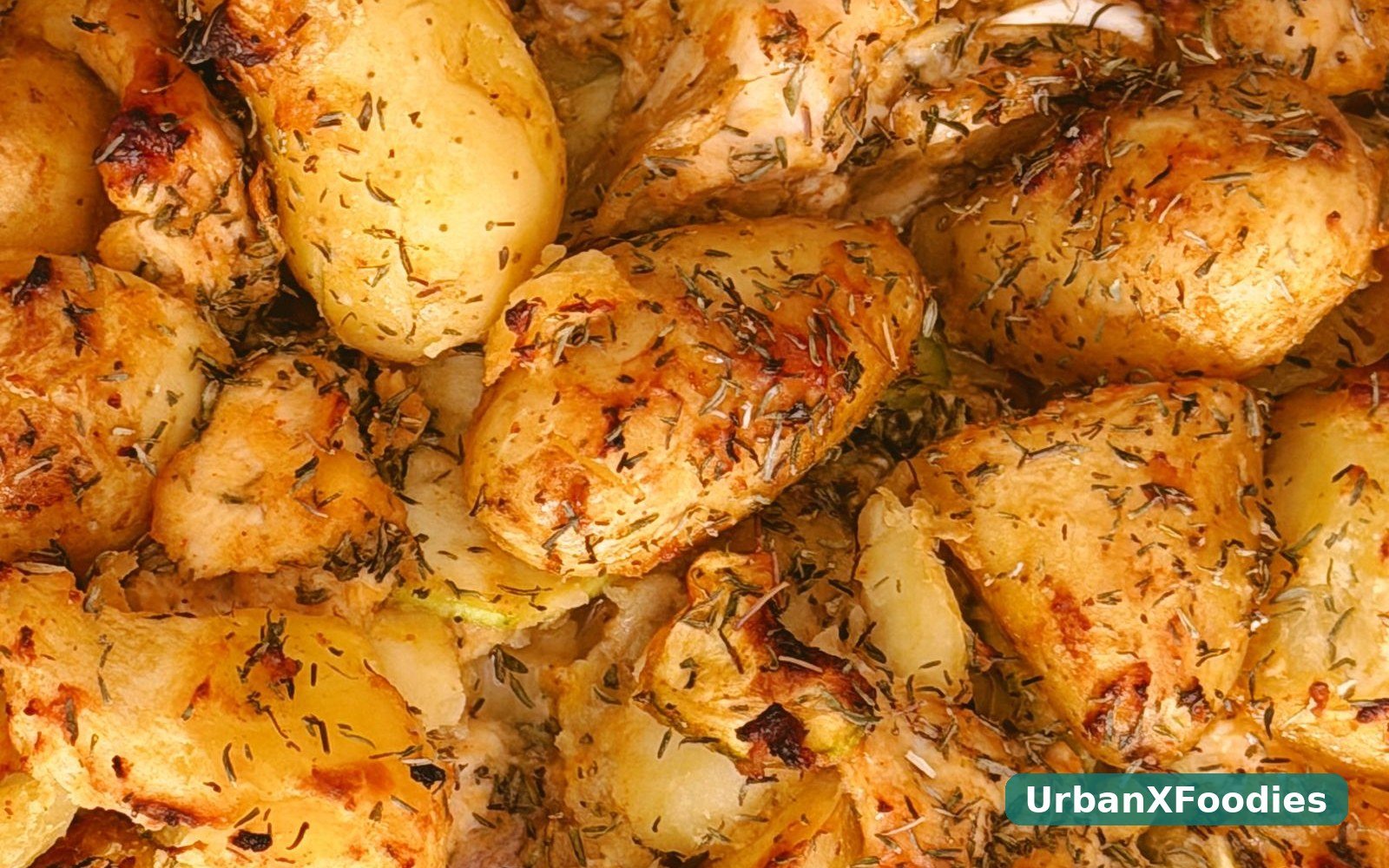
For a classic dinner, serve the chicken with the roasted potatoes from the tray, a pile of steamed green beans or broccoli, and a simple salad of leaves, cucumber and tomato with a lemon dressing. The salad cuts through the richness of the chicken skin, and the whole plate feels balanced without any extra cooking effort.
For something lighter, skip the potatoes and serve the thighs sliced over a big grain salad — couscous or quinoa with herbs, toasted nuts and a squeeze of lemon works beautifully. The warm chicken wilts the herbs slightly, and the pan juices act as a dressing. It is the kind of lunch that feels generous without being heavy.
For a relaxed weekend meal, put the whole tray in the middle of the table with crusty bread, a bowl of salad and a dish of olives, and let everyone help themselves. There is something wonderfully sociable about a tray of roast chicken, and it takes all the pressure off plating things perfectly. A chilled glass of something cold and a good conversation, and dinner is done.
Leftovers deserve a mention too. Cold sliced chicken thigh is superb in a sandwich with mayonnaise, lettuce and a little of the leftover pan sauce, or tossed through pasta with peas and Parmesan for a quick next-day lunch. If you are cooking for two, our simple chicken dinner for two has the same relaxed approach scaled down, and the quick chicken dinner with frozen vegetables is another excellent busy-night standby.
Storage and Make-Ahead
Leftover chicken thighs will keep in an airtight container in the fridge for up to three days. Store them with a spoonful of the pan juices if you can, as this keeps the meat moist when you reheat it. To reheat, place the thighs in a baking dish, cover loosely with foil, and warm them in a moderate oven (180°C / 350°F) for about fifteen minutes, removing the foil for the last few minutes to crisp the skin again. Microwaving works in a hurry, but the skin will soften, so the oven is worth it when you have time.
You can also marinate the chicken ahead. Mix the marinade and coat the thighs up to twenty-four hours in advance, then cover and refrigerate. Take them out of the fridge about twenty minutes before cooking so they are not ice-cold going into the oven, which helps them cook more evenly. The potatoes can be halved ahead too and kept in cold water in the fridge, drained and dried before roasting.
For freezing, cooked chicken thighs freeze well for up to three months. Cool them completely, wrap portions tightly, and label them with the date. Thaw overnight in the fridge and reheat thoroughly until piping hot. Raw marinated thighs can also be frozen in a sealed bag, then thawed overnight in the fridge before roasting as normal — a handy trick for getting ahead on a busy week.
Frequently Asked Questions
Can I use boneless chicken thighs instead of bone-in?
Yes, absolutely. Boneless thighs cook a little faster, so start checking them after about twenty-five minutes. They will still be juicy and full of flavour, though you will miss the crisp skin that bone-in, skin-on thighs give you. If you use skinless boneless thighs, spoon plenty of pan juices over them when serving.
How do I know when the chicken is fully cooked?
The most reliable way is a meat thermometer: it should read 74°C (165°F) in the thickest part, away from the bone. Without a thermometer, pierce the thickest thigh and check that the juices run clear, not pink, and that the meat near the bone is no longer pink. When in doubt, give it another five minutes — thighs are forgiving and will not dry out easily.
Can I make this recipe with chicken breasts?
You can, but breasts need more care because they dry out faster. Use bone-in, skin-on breasts if possible, reduce the cooking time to about twenty-five to thirty minutes, and check the temperature early. You may also want to add a little extra olive oil to the marinade. For more on the differences between cuts, the chicken thigh page gives a useful overview of why thighs stay so juicy.
Do I need to marinate the chicken, or can I roast it straight away?
Marinating for twenty to thirty minutes does improve the flavour, but it is not essential. If you are short on time, simply toss the chicken in the marinade and roast it straight away — it will still taste wonderful. The lemon and garlic do a lot of their work in the oven as the juices mingle in the tray.
What should I serve with lemon herb chicken thighs?
Roast potatoes, rice, couscous or crusty bread all work beautifully, along with any green vegetable or a simple salad. The dish is deliberately versatile, so choose whatever you already have in the kitchen. A lemony side, like a salad with a citrus dressing, echoes the flavours of the chicken nicely.
Can I cook this on the barbecue?
Yes, with a little care. Grill the marinated thighs over medium heat, skin side down first, for about six to eight minutes per side, until cooked through. Keep the heat moderate so the honey and lemon do not burn, and move the chicken to a cooler part of the grill if it colours too quickly. The smoky flavour is wonderful with the lemon and herbs.


