
Introduction
Cooking for two has its own quiet pleasure. There is no crowd to please, no giant pot to wrestle, and no mountain of leftovers you did not ask for. But it also has a trap: most recipes are written for four, and halving them on the fly often leaves you with odd amounts, a sauce that is too thin, or chicken that dries out in a pan that is too big. This recipe is written for two from the start, so the portions, the pan size, and the timing all make sense.
The dinner itself is simple on purpose. Two well-seasoned chicken breasts, seared until golden, finished in a light lemon, garlic, and herb pan sauce, and served with buttery potatoes or rice and a green vegetable. It feels a little special without being fussy, which makes it just right for a weeknight date night at home, a quiet dinner with a friend, or simply a Tuesday when you want to eat well without cooking for an army.
I have made this more times than I can count, and the part I return to is the balance. The chicken is the star, but the sauce does the talking: butter and garlic for richness, lemon for brightness, and a handful of herbs to tie it together. Nothing overwhelms anything else, and the whole plate tastes considered rather than assembled in a hurry.
In the sections below, you will find exactly what to buy for two, how to keep the chicken juicy, and a few gentle variations if you want to change the mood of the meal. There are also storage notes for the rare occasion anything is left, and answers to the questions people usually ask the first time they scale a recipe down.
Why You Will Love This Recipe
The first reason is portion honesty. Two chicken breasts, a sauce made in the same pan, and sides sized for two plates mean you finish dinner feeling satisfied, not stuffed, and you do not waste food. If you cook for a household of two regularly, that alone saves money and fridge space over a month.
The second reason is speed. Because the pan is smaller and the chicken cooks quickly, dinner is ready in about thirty minutes, including the time it takes to boil potatoes or rice. The sauce comes together in the minutes while the chicken rests, using the golden bits left in the pan, so you get a restaurant-style finish with no extra pot and no complicated technique.
- Written for two, so no awkward halving or guessing.
- One pan for chicken and sauce, plus one pot for the side.
- Ready in about 30 minutes from start to finish.
- Elegant enough for a date night, easy enough for a weeknight.
- Simple ingredients that you probably already have.
It also teaches a useful skill: cooking chicken properly for a small pan. Once you can sear two breasts, rest them, and build a quick pan sauce, you can apply the same method to pork, fish, or mushrooms. If you enjoy meals in this style, our chicken recipes collection has plenty more small, practical dinners to explore.
Ingredients You Will Need
Buy the best chicken you can afford, but do not worry about it being fancy. Evenly sized breasts cook most evenly, so if one end is much thicker than the other, give it a few gentle taps with a rolling pin between sheets of baking paper until the thickness is more even.
- 2 boneless, skinless chicken breasts (about 170g each)
- 1/2 teaspoon salt, plus more to taste
- 1/2 teaspoon black pepper
- 1/2 teaspoon garlic powder
- 1 tablespoon olive oil
- 1 tablespoon butter, plus an extra knob for the sauce
- 3 garlic cloves, thinly sliced
- 120 ml chicken stock
- Juice of half a lemon, plus a few thin slices to serve
- 1 teaspoon Dijon mustard
- 1 tablespoon chopped fresh parsley or thyme
- 400g baby potatoes, halved, or 150g rice, to serve
- Green beans, broccoli, or a simple salad, to serve
The mustard is optional, but I recommend it. It does not make the sauce taste of mustard; it simply deepens the flavour and helps the sauce come together smoothly. If you do not have Dijon, a small spoonful of wholegrain mustard works just as well.
For the side, choose whatever fits your evening. Baby potatoes boiled and tossed in butter are comforting and easy. Rice is lighter and soaks up the sauce. A bag of salad leaves with lemon and olive oil needs no cooking at all, which is a perfectly respectable choice on a tired night.
How to Make Simple Chicken Dinner for Two
Start the side first, since it takes the longest. Put the potatoes in salted water and simmer until tender, or start the rice according to the packet. While that cooks, pat the chicken dry, season both sides with salt, pepper, and garlic powder, and let it sit at room temperature for ten minutes. Cold chicken straight from the fridge cooks unevenly, so this short rest matters more than people think.
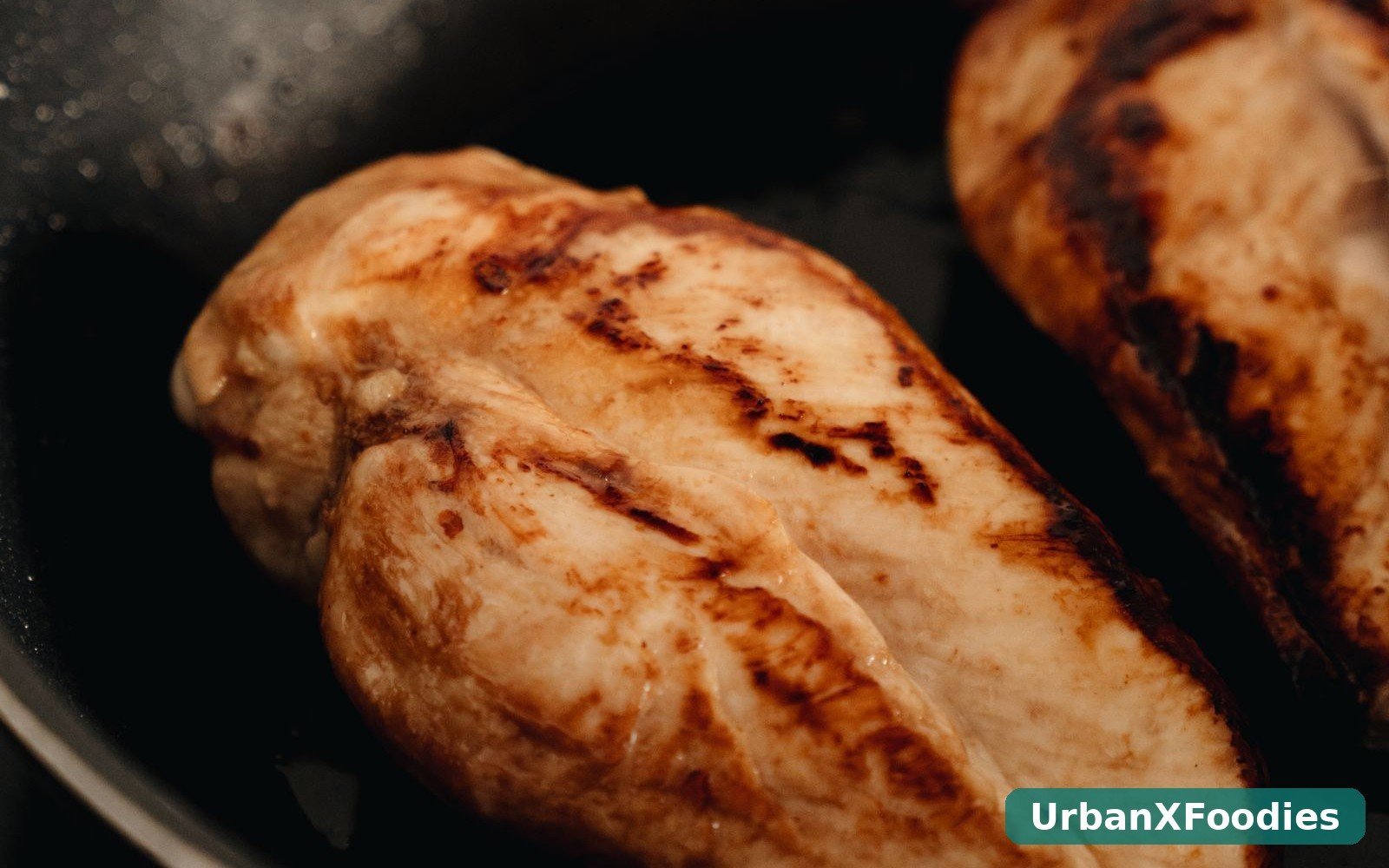
Heat the olive oil and butter in a medium frying pan over medium-high heat. When the butter foams and the pan is hot, lay the chicken in and do not move it for five minutes. You want a deep golden crust. Turn the breasts and cook for another four to five minutes, until just cooked through. The safest check is 74°C (165°F) at the thickest part. Lift the chicken onto a warm plate, cover loosely with foil, and rest it for five minutes.
Turn the heat to medium and add the garlic to the same pan, stirring for thirty seconds until fragrant but not browned. Pour in the stock, scraping up the golden bits, and let it bubble for two minutes until slightly reduced. Whisk in the mustard and lemon juice, then add the extra knob of butter and swirl the pan until the sauce is glossy. Taste for salt, pepper, and lemon, adjusting until it tastes bright rather than sharp.
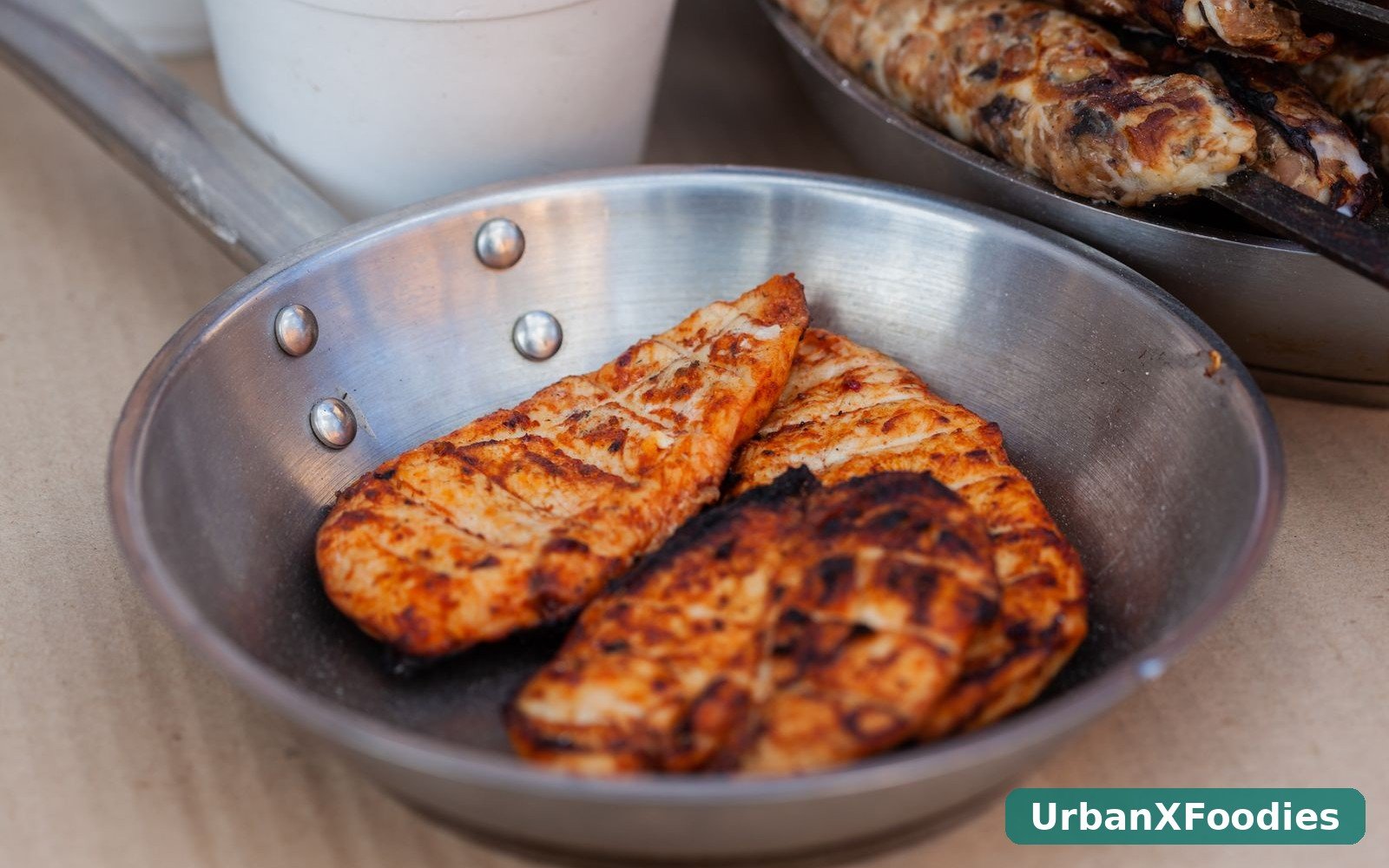
Slice the rested chicken on a slight diagonal and arrange it on warm plates. Spoon the pan sauce over the top and scatter with parsley or thyme. Serve with the potatoes or rice and your green vegetable, with a little extra sauce spooned over the side as well. Chicken breast is a lean cut that rewards gentle handling, and if you are curious about the cut itself, chicken breast gives a useful overview of how it is used in cooking.
One small detail makes a real difference: warm plates. A cold plate cools a small portion quickly, and a dinner for two deserves to stay warm while you sit down. Run the plates under hot water for a minute and dry them, or pop them in a low oven while you cook. It costs nothing and makes the meal feel cared for.
If the sauce tastes flat, it usually needs a pinch more salt or another squeeze of lemon, not more butter. Taste in small steps, and remember that the chicken will have seasoned juices on the plate that mix with the sauce as you eat. A good pan sauce should taste slightly too bright on its own, because it mellows once it meets the chicken and potatoes.
Tips for Cooking for Two
Use a pan that fits the food. A huge pan for two breasts spreads the juices too thin, and the sauce evaporates before it can form. A medium pan, about 24 cm, is ideal. It keeps the fond concentrated and the sauce silky, which is exactly what you want here.
- Choose evenly sized breasts so they finish at the same time.
- Let the chicken rest; slicing too early dries it out.
- Keep the garlic moving so it perfumes the pan without burning.
- Warm your plates for a small meal that stays warm.
- Season the sauce at the end, after the stock has reduced.
Do not be tempted to double the sauce unless you are also doubling the chicken. A pan sauce is about balance, and too much liquid in a small pan just boils the chicken instead of glazing it. If you want extra sauce for the potatoes, add only a splash more stock and reduce it well. For more ideas sized for busy evenings, our one-pan skillet recipes follow the same keep-it-simple logic.
Variations to Try
A creamy version is lovely when the evening is cold. Stir two tablespoons of cream cheese or double cream into the pan sauce at the end, off the heat, and add a handful of spinach to wilt. A mushroom version is equally good: fry sliced mushrooms in the pan before the garlic, letting them brown properly, then continue exactly as written.
For a Mediterranean turn, swap the lemon and thyme for sun-dried tomatoes, olives, and basil, and serve with crusty bread instead of potatoes. For a little warmth, add a pinch of chilli flakes with the garlic. None of these changes the method, which is the point; once the base is in your hands, you can dress it up however the evening feels.
If you have pantry staples to use up and want a different kind of two-person dinner another night, our easy chicken dinner with pantry ingredients is a natural companion recipe, generous with sauce and happy over rice. And if you want a broader plan for the week, simple chicken dinner ideas for busy nights will give you several more starting points.
Serving Ideas

Buttery baby potatoes and green beans are my default here, because they feel like a proper dinner without extra effort. If you prefer rice, a lemon and herb rice made by stirring zest and parsley through cooked rice is lovely with the pan sauce. A crisp salad with cucumber, radish, and a lemon dressing keeps things light if you have already had a heavy lunch.
For a date-night touch, serve the chicken sliced and fanned over the potatoes, with the sauce spooned in a neat line and a glass of something cold alongside. A small dessert, even just good chocolate or berries with cream, finishes the evening without turning the kitchen into a second cooking session.
Presentation matters more for two than for a crowd, because there is nowhere for a messy plate to hide. Wipe the rim of the plate, place the chicken slightly off-centre, and let the sauce do the decorating. It takes ten seconds and makes a simple dinner feel like an occasion, which is often all a weeknight needs.
Storage and Make-Ahead
If anything is left, store the chicken and sauce together in a sealed container in the fridge for up to two days. Reheat gently in a covered pan with a splash of stock, until piping hot. Sliced chicken reheats faster than whole breasts, so slice before storing if you know it is destined for lunch.
Leftover chicken from this recipe is excellent cold in a sandwich with salad and a little mayonnaise, or sliced over a grain bowl the next day. The sauce, if any remains, makes a good dressing for warm potatoes. Avoid freezing small portions of pan sauce on their own, as butter sauces can split when reheated; the chicken itself freezes fine for up to three months if needed.
You cannot really make this ahead in the usual sense, because seared chicken is best fresh, but you can prep everything: wash and halve the potatoes, slice the garlic, measure the stock, and chop the herbs. With that done, the cooking itself takes less than fifteen minutes, which is about as close to instant as a proper dinner gets.
Frequently Asked Questions
Can I use chicken thighs instead of breasts?
Yes, boneless thighs work beautifully and are more forgiving. Cook them for about six minutes on the first side and five on the second, and check they reach 74°C (165°F). They will be a little richer, which suits the lemon butter sauce very well.
How do I stop the chicken drying out?
Do not overcook it, let it rest for five minutes, and slice only when you are ready to serve. A thermometer is the most reliable tool here. If you regularly cook chicken, it is worth owning one, because guesswork is the main cause of dry breasts.
Can I double this recipe for four people?
Yes, but use a larger pan and cook the chicken in two batches so it browns rather than steams. Make the sauce in the same pan after the second batch, doubling the stock and butter, and keep the first batch warm under foil while you finish.
What can I serve instead of potatoes?
Rice, couscous, pasta, or warm bread all work. For a lighter plate, try roasted vegetables or a big salad. The sauce is versatile, so choose the side that suits your appetite and your evening.
Is this recipe gluten-free?
Yes, as written, provided your stock and mustard are gluten-free. Check the labels, and serve with rice or potatoes rather than bread to keep the whole meal gluten-free. For general background on chicken in cooking, chicken as food is a helpful reference.


Pingback: No Oven Chicken Dinner Recipes: Easy, Delicious Meals Made on the Stovetop – UrbanXFoodies
Pingback: Simple Chicken Dinner Ideas for Busy Nights – UrbanXFoodies