

There are some vegetables that seem to cook themselves into sweetness, and carrots are at the top of that list. A raw carrot is crunchy and fresh, but a roasted carrot is something else entirely: soft in the middle, caramelised at the edges, and so sweet that you start to understand why people once used carrots in cakes. Add a spoonful of honey and a few sprigs of thyme, and you have a side dish that tastes like it belongs at a Sunday lunch, even when you have only had half an hour to make dinner.
I started making these carrots on a night when the fridge was nearly empty and dinner needed to look like more than it was. There were carrots, there was honey, there was a small bunch of thyme going slightly soft in the fridge, and that was about it. Half an hour later, the carrots came out of the oven glossy and golden, the thyme had gone fragrant and crisp at the edges, and the whole tray smelled like something far more considered than the sum of its parts. It has been a regular ever since, and it is the side dish I reach for when I want dinner to feel generous without making extra work for myself.
The method could hardly be simpler. You toss the carrots in oil, honey, and thyme, spread them on a tray, and let a hot oven do the rest. The honey caramelises as it roasts, giving the carrots a sticky, golden glaze, while the thyme adds a gentle, earthy note that keeps the sweetness from feeling one-dimensional. A squeeze of lemon or a splash of vinegar at the end brightens everything, and a pinch of flaky salt over the finished tray makes the flavours pop. It is the kind of recipe that rewards you far more than the effort suggests.
Why You Will Love This Recipe
The first reason is flavour. Roasting concentrates the natural sweetness of carrots, and honey takes that sweetness one step further, creating sticky, caramelised edges that are almost candied without being cloying. Thyme is the perfect partner here: it is earthy and slightly floral, and it cuts through the sweetness just enough to keep each bite interesting. The combination is simple, but it tastes thoughtful, the way a good side dish should. If you have ever thought of carrots as a boring vegetable, this recipe is a good argument otherwise.
The second reason is how little work it takes. Peeling and halving a bag of carrots takes about ten minutes, and after that the oven does everything. There is no sauce to make, no second pan, and only one tray to wash. The carrots also hold up well: they stay warm for a while without spoiling, they reheat nicely, and they are just as good at room temperature, which makes them useful for buffets, packed lunches, and dinners where the timing of everything else is uncertain. They are naturally gluten-free and vegetarian, and with one small swap they are vegan too, which makes them easy at a mixed table.
Finally, these carrots look beautiful. A tray of glossy, golden carrots with green thyme leaves scattered over it is the kind of dish that makes a table look abundant, and it photographs well too, if that matters to you. They are also a genuinely wholesome choice, and the background on the carrot explains why this root vegetable has been valued for so long. For more dishes in the same spirit, the sides and vegetables collection has plenty to explore next.
- Sweet and caramelised: honey gives the carrots a sticky, golden glaze.
- Thyme keeps it balanced: earthy and fragrant, never one-dimensional.
- Ten minutes of prep: the oven does the rest, one tray to wash.
- Holds well: good hot, warm, or at room temperature.
- Naturally gluten-free: and easily made vegan with maple syrup.
Ingredients You Will Need
Choose carrots that feel firm and snap rather than bend, with bright orange colour and no soft spots. Smaller, thinner carrots roast faster and caramelise more evenly, but large carrots work just as well if you halve or quarter them lengthways so the pieces are roughly the same thickness. If you can find bunched carrots with their green tops still attached, they are often sweeter and fresher, and they look lovely on the plate with a little of the green left on. Just scrub them well, since the tops can carry grit.
- 800g carrots, peeled
- 2 tablespoons olive oil
- 2 tablespoons honey (or maple syrup for a vegan version)
- 1 tablespoon butter, melted (or extra olive oil for vegan)
- 1 tablespoon fresh thyme leaves, plus a few sprigs for garnish
- 1/2 teaspoon fine sea salt
- 1/4 teaspoon black pepper
- 1 teaspoon lemon juice or apple cider vinegar, to finish
- Flaky sea salt, to finish
Halve the carrots lengthways, and quarter any that are very thick, so that all the pieces are roughly the same size, about as thick as your thumb. Even thickness matters more than exact shape: pieces of different sizes will cook unevenly, and you will end up with some burnt and some underdone. If your carrots are very long, cut them in half crossways as well, so they fit on the tray without overlapping. Give them a quick rinse and pat them dry, since excess water will thin the glaze and slow the caramelisation.
How to Make Honey Roasted Carrots with Thyme
Heat the oven to 200°C (400°F) and line a large baking tray with parchment paper. Parchment is worth using here, because honey can stick to a bare tray as it caramelises, and nobody enjoys scrubbing burnt honey off metal. In a large bowl, whisk together the olive oil, honey, melted butter, thyme leaves, salt, and pepper, then add the carrots and toss well with your hands, making sure every piece is coated in the glossy mixture. The carrots should look shiny all over, with thyme leaves clinging to them.
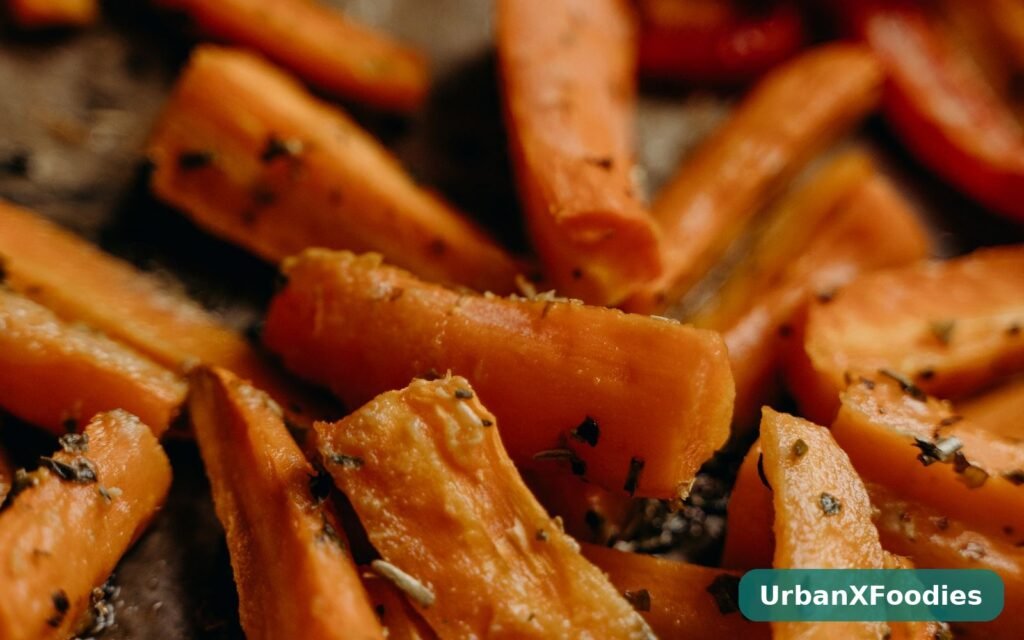
Spread the carrots on the lined tray in a single layer, cut side down where possible, with space between the pieces. The cut sides are where the best caramelisation happens, so putting them face down against the hot tray gives you the deepest colour and the stickiest glaze. Pour any glaze left in the bowl over the carrots, then roast for 25 minutes without opening the oven, so the undersides can brown properly.
After 25 minutes, turn the carrots over and roast for another 10 to 15 minutes, until they are tender when pierced with a knife and deeply golden at the edges, with some darker, caramelised spots. The honey will darken as it cooks, and that is what you want, but if the glaze starts to look very dark before the carrots are tender, cover the tray loosely with foil for the last few minutes. Take the tray out, drizzle over the lemon juice or vinegar, toss gently, and finish with a pinch of flaky sea salt and a few fresh thyme leaves. Serve warm or at room temperature. If you want a simple main to go with them, the quick chicken dinner with frozen vegetables keeps the whole meal in the same easy spirit.
- Step 1: Heat the oven to 200°C (400°F) and line a tray with parchment.
- Step 2: Whisk the oil, honey, butter, thyme, salt, and pepper, then toss with the carrots.
- Step 3: Spread cut side down in a single layer and roast for 25 minutes.
- Step 4: Turn and roast for 10 to 15 minutes more, until tender and deeply golden.
- Step 5: Finish with lemon juice, flaky salt, and fresh thyme, then serve.
For the air fryer version, cook the coated carrots at 190°C (375°F) for 18 to 22 minutes, shaking the basket halfway through, until tender and caramelised. You will need to work in batches, since crowding stops the glaze from caramelising properly, but the smaller space means the honey browns a little faster, so keep an eye on them in the last few minutes.
Tips
The most important thing with honey-roasted carrots is watching the honey. Honey caramelises beautifully, but it can go from golden to burnt quite quickly, especially in a hot oven, and burnt honey tastes bitter. If your oven runs hot, or if your carrots are thin and cook fast, check them a few minutes early and pull the tray as soon as the edges are deeply golden rather than waiting for a darker colour. The carrots will keep cooking a little from the residual heat of the tray, so slightly early is better than slightly late.
Parchment paper is not optional in my view, unless you enjoy scrubbing. Honey glaze sticks firmly to bare metal as it cools, and a lined tray means you can lift the carrots straight off and throw the paper away. If you do not have parchment, a well-oiled tray and a quick soak in hot water will do, but parchment makes the whole thing painless. Another small detail: use runny honey rather than set honey, since it coats the carrots more evenly. If your honey has crystallised, warm the jar briefly in a bowl of hot water until it loosens, which takes only a couple of minutes.
Cut size is the other thing that matters. Carrots of different thicknesses cook at different rates, so take a moment to halve the thick ones and leave the thin ones whole. It feels fussy, but it is the difference between a tray where every carrot is tender and glossy and a tray where half are soft and half are still firm. A similar balance of sweetness and heat is at work in the honey-glazed carrots from Taste of Home, which is worth a look if you want another take on the same idea.
Variations to Try
Once you have the basic method, it is easy to change the flavour without changing the work. For a spicier version, add half a teaspoon of cumin and a pinch of chilli flakes to the glaze, and finish with a squeeze of lime instead of lemon. The warmth of the spices plays beautifully against the honey, and the dish takes on a completely different character. For a festive version, add a handful of dried cranberries and some toasted pecans in the last five minutes of roasting, which gives you colour, crunch, and a sweet-tart contrast that suits a holiday table.
For a savoury twist, swap the honey for a tablespoon of maple syrup and a teaspoon of wholegrain mustard, which gives you a tangy, grown-up glaze that works especially well with roast pork or sausages. For a herby version, use rosemary instead of thyme, or a mixture of both, and add a crushed clove of garlic to the glaze. And if you want to turn the carrots into a fuller dish, toss the finished carrots through cooked couscous or quinoa with crumbled feta, toasted seeds, and plenty of fresh herbs. It makes a wonderful lunch, and it uses up leftovers without feeling like leftovers at all. For a classic roast-dinner partner on the same table, the crispy potatoes without breadcrumbs are a natural match.
If you have rainbow carrots, use them: the purple, yellow, and white varieties roast just the same, and a tray of mixed colours looks spectacular with almost no extra effort. Just be aware that purple carrots can stain the glaze slightly, which is harmless but worth knowing if you are aiming for a pristine golden tray. Mixed colours also tend to cook at slightly different rates, so check the thinner ones early.
Serving Ideas
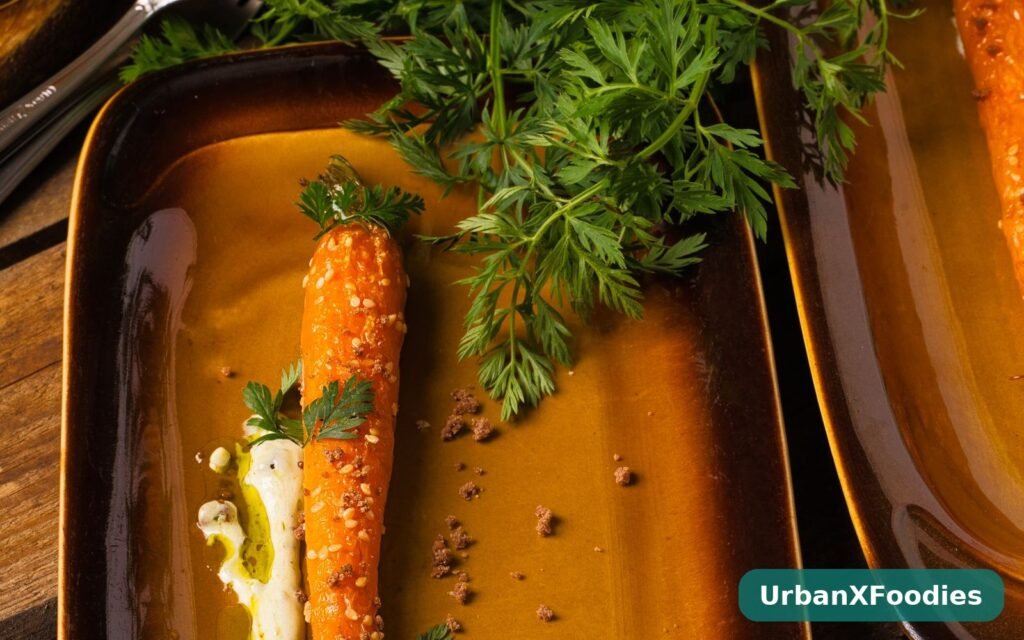
These carrots go with almost any roast or grilled main, which is why they appear so often in my kitchen. With roast chicken and gravy, they add sweetness and colour to a classic plate. With grilled lamb or pork chops, the honey glaze echoes the caramelised edges of the meat, and the thyme ties the whole plate together. With a simple baked salmon fillet, they keep dinner light but satisfying, and the lemon finish matches the fish beautifully. And with a vegetarian main like a lentil stew or a grain bowl, they bring the sweetness and richness that makes the meal feel complete.
For a holiday table, pile the carrots onto a warm platter, scatter over extra thyme and a few toasted nuts, and let people help themselves. They hold their heat well and do not suffer from sitting for twenty minutes, which is a genuine blessing when you are juggling several dishes at once. For a weeknight dinner, serve them straight from the tray with a simple main and a green salad, and dinner is done. A dollop of yoghurt mixed with a little lemon zest on the side is a lovely cooling contrast, especially with the spicier variation. When the whole meal needs to stay this simple, the 3-ingredient chicken dinner ideas keep the effort low and the flavour high.
Storage and Make-Ahead
Leftover honey roasted carrots keep in the fridge for four to five days in a sealed container, and they reheat well, which is more than can be said for many roasted vegetables. To reheat, spread them on a tray and warm at 190°C (375°F) for eight to ten minutes, or microwave them gently in short bursts, stirring between each one. The glaze will soften as it warms, and a fresh squeeze of lemon and a pinch of flaky salt will wake the flavours back up. Cold leftover carrots are also excellent chopped into salads, grain bowls, or sandwiches, where their sweetness contrasts nicely with sharp cheese or tangy dressing.
You can prep ahead by peeling and cutting the carrots up to two days in advance and keeping them in a container of cold water in the fridge, which keeps them crisp. Drain and dry them well before tossing with the glaze, since wet carrots will thin the honey and slow the caramelisation. You can also toss the carrots with the glaze a few hours ahead and keep them covered in the fridge, then spread them on the tray and roast when you are ready. For freezing, roasted carrots freeze reasonably well for up to three months, though they will be softer after thawing. Reheat them from frozen at 190°C (375°F) for fifteen to twenty minutes, and they are perfectly good folded into soups or grain dishes, even if they are not quite as glossy as fresh.
Frequently Asked Questions
Why did my honey glaze burn?
Honey caramelises quickly, especially in a hot oven, and it can go from golden to burnt in just a few minutes. Check the carrots a little early, especially if your oven runs hot or your carrots are thin, and pull the tray as soon as the edges are deeply golden. Covering the tray loosely with foil for the last few minutes also protects the glaze while the carrots finish cooking through.
Can I use maple syrup instead of honey?
Yes, and it works beautifully, giving a slightly deeper, more complex sweetness. Use the same amount, and the recipe becomes vegan if you also swap the butter for olive oil. Agave syrup works too, though it is sweeter and less flavourful, so you might want to use a touch less and add an extra squeeze of lemon at the end.
Do I need fresh thyme, or will dried thyme work?
Fresh thyme is best here, since its leaves crisp up in the oven and look lovely scattered over the finished dish. If you only have dried thyme, use one teaspoon instead of a tablespoon of fresh leaves, and add it to the glaze rather than scattering it at the end. The flavour will still be good, though you will miss the pretty green garnish.
Should I peel the carrots?
Peeling gives the smoothest glaze and the cleanest flavour, and I usually peel. If your carrots are young, fresh, and well scrubbed, you can leave the skins on, which adds a little rustic texture and saves time. Just scrub them thoroughly, since any grit left on the skins will end up in the glaze.
Can I make honey roasted carrots in advance for a party?
Yes, and they are one of the better vegetables for this, since they hold up well. Roast them up to a day ahead, refrigerate, and reheat at 190°C (375°F) for ten minutes before serving, with a fresh squeeze of lemon and a pinch of flaky salt. They are also good served at room temperature, so you can roast them in the morning and set them out later without any last-minute fuss.
What main dishes go best with honey roasted carrots?
Roast chicken, grilled pork, lamb chops, baked salmon, and sausages all pair beautifully, since the sweetness of the carrots complements savoury, caramelised meat. For a vegetarian meal, serve them with lentil stew, a grain bowl, or a baked feta dish, where their sweetness balances salty and tangy flavours.