
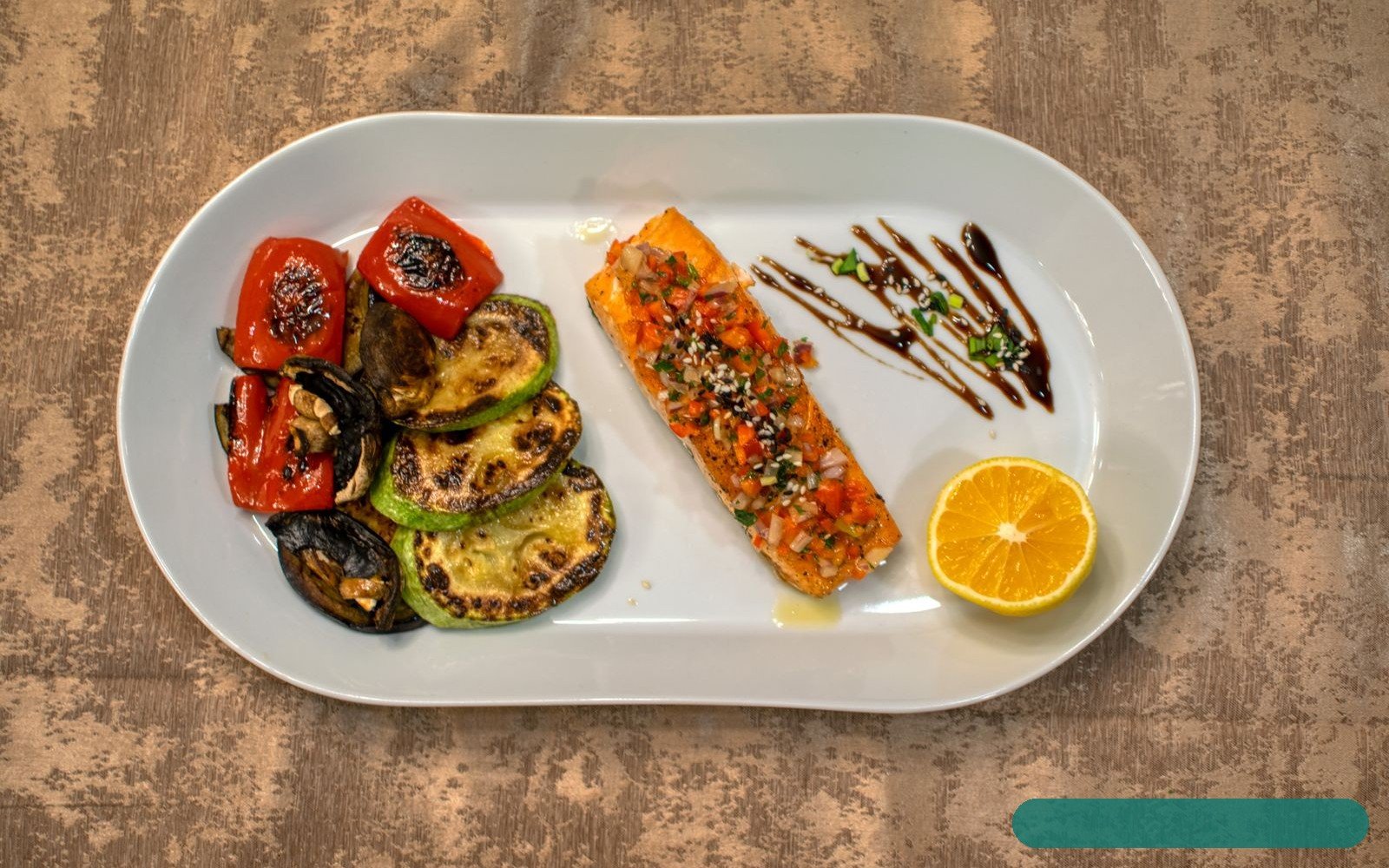
Salmon used to be my special-occasion fish. I saved it for weekends, for guests, for nights when I felt like cooking properly, because I was convinced it was easy to ruin. Then one tired Tuesday I put two fillets in the air fryer with nothing but salt, pepper, and a squeeze of lemon, and twelve minutes later I was eating salmon that was flaky inside, golden on top, and better than most of the salmon I had paid good money for in restaurants. That was the night salmon became a weeknight dinner in my house, and it has never gone back to being special-occasion only.
There is something almost unfair about how well the air fryer suits salmon. The hot circulating air cooks the fish quickly and evenly, so the inside stays moist while the top gets a lovely golden colour. There is no pan to watch, no oil spitting on the hob, no fish smell lingering in the kitchen for hours afterwards. You put the fillets in, you set a timer, and you get on with making a salad or putting rice on. By the time the table is set, dinner is ready.
The lemon butter is what turns this from a piece of cooked fish into a meal people ask about. It is not a complicated sauce. It is butter, lemon juice, garlic, and herbs, melted together and spooned over the hot fillets so it soaks into every flake. It takes about two minutes to make, it uses ingredients you almost certainly have, and it makes the salmon taste like you tried much harder than you did. That is my favourite kind of cooking: maximum effect, minimum effort, and nobody at the table needs to know how easy it was.
Why You Will Love This Recipe
First, it is genuinely fast in a way that changes how often you cook fish. Not just fast to cook, though twelve minutes in the basket is quick enough, but fast from start to finish. There is no marinating, no complicated prep, no special equipment. The whole thing, from opening the fridge to sitting down with a plate, takes about twenty minutes, and most of that time the air fryer is doing the work while you get on with something else. On nights when cooking feels like too much, twenty minutes is the difference between a proper dinner and a bowl of cereal.
Second, it is forgiving, and forgiveness matters with fish, because fish has a reputation for being easy to ruin. Salmon is actually one of the most forgiving fish you can cook: it has enough fat to stay moist across a reasonable window of cooking time, and it tastes good anywhere from just flaky to fully cooked through. That wide margin for error makes this a brilliant recipe if you are still learning your air fryer, because every model runs a little differently and salmon gives you room to learn yours without ruining dinner. If you want more ideas in the same spirit, the air fryer recipes collection has plenty of fast weeknight winners.
Third, it feels like a treat without costing a treat’s worth of effort. Salmon is rich and satisfying in a way that chicken sometimes is not, and with the lemon butter it tastes like something from a restaurant menu. Serve it with rice and vegetables, and you have a dinner that looks and feels complete, even though you barely did anything. It is also genuinely good for you, which is a nice bonus, though I will be honest: I make it because it tastes wonderful, and the health part is just a happy accident.
- Ready in under 20 minutes: including prep and the lemon butter sauce.
- No fish smell, no spitting oil: the air fryer keeps the kitchen calm.
- Flaky inside, golden on top: the air fryer gets both textures right.
- One-basket cooking: the clean-up is a basket and a small pan.
- Feels special, cooks easy: restaurant flavour with weeknight effort.
Ingredients You Will Need
You do not need anything fancy here, and that is part of the charm. Four salmon fillets, a lemon, some butter, and a few pantry staples are the whole shopping list. The one thing worth spending a little care on is the salmon itself: try to buy fillets that are roughly the same thickness, so they cook evenly. A very thin tail piece will overcook while a thick centre-cut fillet is still catching up, and that is the most common reason for uneven salmon.
- 4 salmon fillets (about 150 to 170 g each), skin on or off
- 1 teaspoon fine sea salt
- 1/2 teaspoon freshly ground black pepper
- 1/2 teaspoon garlic powder
- 1/2 teaspoon paprika
- 1 tablespoon olive oil
- 3 tablespoons unsalted butter
- 2 cloves garlic, finely minced
- Juice of 1 lemon (about 2 tablespoons), plus lemon wedges to serve
- 1 tablespoon chopped fresh parsley or dill
- Pinch of chilli flakes (optional)
A note on skin: skin-on fillets are my preference, because the skin protects the fish from drying out and goes wonderfully crisp in the air fryer, almost like a cracker. If you buy skinless fillets, they work perfectly well too; just reduce the cooking time by a minute or two and handle them gently, because skinless salmon is more delicate when you lift it out of the basket. Either way, pat the fillets dry with paper towels before seasoning. Dry surfaces brown better, and that golden top is half the pleasure of this dish. The background on salmon as food explains why this fish stays so moist: it is naturally rich in healthy fats, which is exactly what keeps it forgiving in the air fryer.
How to Make Air Fryer Salmon with Lemon Butter
Start by taking the salmon out of the fridge about fifteen minutes before cooking, if you remember. It is not essential, but fish that is not ice cold cooks a little more evenly. Pat every fillet dry with paper towels, including the skin side if yours have skin. Rub the fillets with the olive oil and season all over with the salt, pepper, garlic powder, and paprika. Let them sit for ten minutes while the air fryer preheats, which gives the seasoning a head start and gives you time to make the lemon butter.
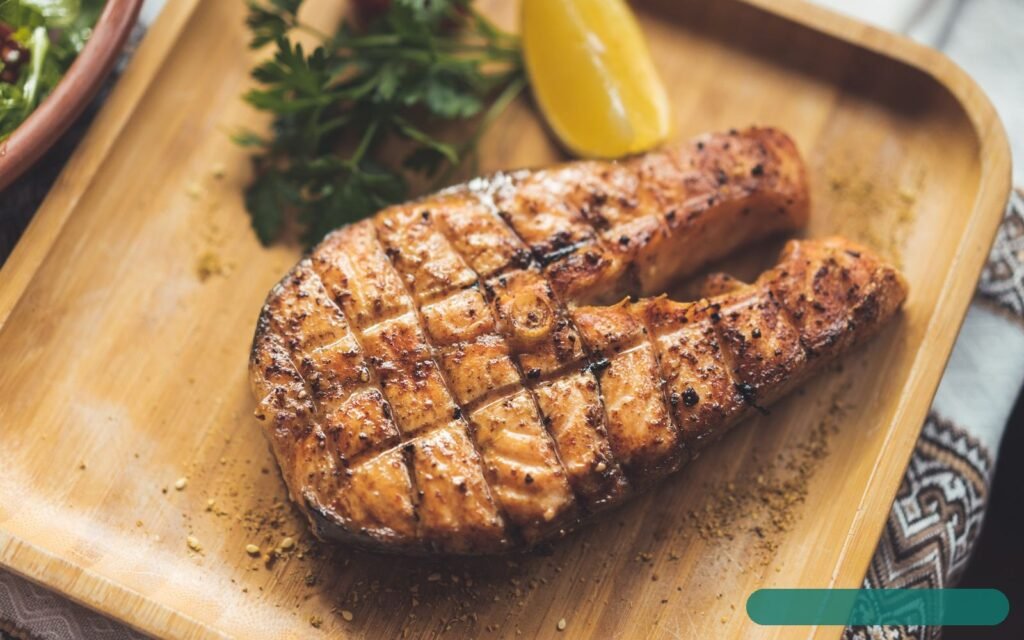
Preheat the air fryer to 200°C (400°F) for three to five minutes. A preheated basket matters more than people think: it helps the top of the salmon colour quickly and gives skin-on fillets a head start on crisping. Place the fillets in the basket in a single layer, skin-side down if they have skin, with a little space between them. If your basket is small, cook in two batches. It is better to wait a few extra minutes than to crowd the fish, because crowded fillets steam instead of browning, and browning is where the flavour lives.
- Cook the salmon: 10 to 12 minutes at 200°C (400°F), depending on thickness. The fish is done when it flakes easily with a fork and the centre is just opaque.
- Check for doneness: a thermometer in the thickest part should read about 125°F (52°C) for medium or 145°F (63°C) for fully cooked. I take mine out at the lower end and let it rest.
- Make the lemon butter: while the salmon cooks, melt the butter in a small pan over low heat, add the garlic, and cook for one minute until fragrant. Take it off the heat and stir in the lemon juice, parsley, and chilli flakes if using.
- Rest briefly: let the salmon rest for two to three minutes after cooking, which lets the juices settle.
- Spoon over the sauce: drizzle the warm lemon butter over the fillets just before serving, and add lemon wedges on the side.
When the salmon comes out, resist the urge to cut into a fillet immediately to check it. Two or three minutes of resting makes a genuine difference: the fish relaxes, the flakes settle, and the centre finishes cooking gently from its own heat. The lemon butter should go on at the last moment, while the fish is still hot, so it melts into the flakes instead of sitting on top like a cold sauce. If you enjoy this style of cooking, the air fryer chicken thighs without breading use the same simple, no-fuss approach and are just as popular at my table.
Tips
The single most important tip is not to overcook the salmon. Fish keeps cooking after it leaves the heat, and salmon that is perfect in the basket can turn dry on the plate if you wait too long. Take the fillets out when the centre is just barely opaque, or when a fork flakes the fish with only slight resistance, and let resting do the rest. A thermometer takes the guesswork out completely, and if you cook fish even occasionally, it is the most useful small tool you can own.
Do not crowd the basket, do not skip preheating, and do not keep opening the basket to check. Every time you open it, heat escapes and the cooking stalls, which is the opposite of what you want with a fast-cooking fish. Trust the timings, check once at the end, and if the top is not quite as golden as you would like, give it one or two extra minutes while watching closely, because salmon goes from golden to dry faster than you think. And handle the cooked fillets gently: a wide spatula or fish slice is much better than tongs, which can break the flakes apart.
A few more small things that make a difference. Make the lemon butter gently: garlic goes from fragrant to bitter in about thirty seconds over high heat, so keep the pan low and take it off the heat the moment it smells good. Add the lemon juice off the heat, because lemon juice in a very hot pan can taste sharp and thin instead of bright. And use real butter, not margarine, because the sauce is so simple that the butter is doing most of the work. For a second opinion on method, the Taste of Home air fryer salmon recipe follows a similar approach and is worth a read.
Variations to Try
The lemon butter is a great default, but salmon takes on other flavours beautifully, and changing the sauce is the easiest way to keep this recipe from feeling repetitive. For a garlic herb version, skip the lemon and stir chopped dill, parsley, and chives into the melted butter with an extra clove of garlic. For a honey mustard version, whisk a tablespoon of honey and a tablespoon of Dijon mustard into the butter instead of lemon juice, and brush it over the fillets in the last two minutes of cooking.
A spicy version works well with a teaspoon of Cajun seasoning in place of the paprika, served with a cooling yoghurt dip and lime wedges. For an Asian-inspired twist, brush the fillets with a mixture of soy sauce, honey, grated ginger, and sesame oil before cooking, then scatter with sesame seeds and spring onions. And for a Mediterranean feel, season with oregano and lemon zest, and serve with olives, feta, and a tomato salad. One caution applies to all of these: sugary glazes burn easily in the intense heat of an air fryer, so brush them on late and watch closely. If you want more simple protein ideas, the air fryer chicken tenders without breadcrumbs are just as quick and just as family-friendly.
Serving Ideas
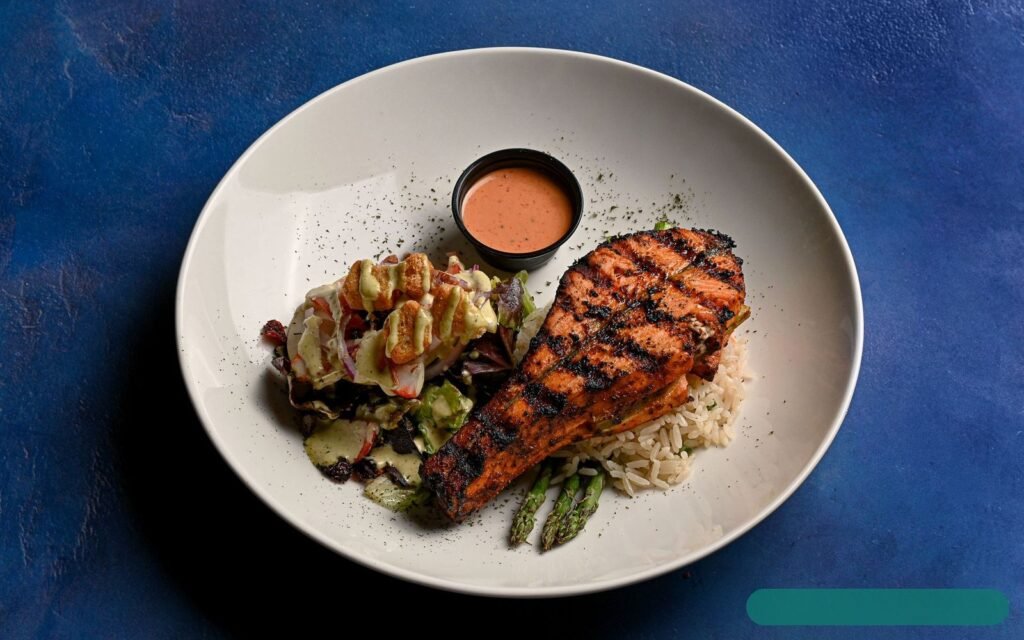
This salmon is at its best the moment the lemon butter goes on, when the fish is still hot and the sauce is melting into the flakes, so I try to have everything else ready before the salmon comes out. My most common pairing is simple: fluffy rice, steamed green beans or asparagus, and lemon wedges. The rice soaks up the lemon butter beautifully, and the green vegetables give the plate colour and crunch. It is a dinner that looks complete without any fuss.
For a lighter meal, serve the salmon flaked over a big salad with crunchy lettuce, cucumber, avocado, and a sharp dressing, or in warm flatbreads with pickled red onion and garlic yoghurt sauce. It is also excellent cold the next day, flaked into sandwiches or grain bowls, which makes it a useful cook-once-eat-twice dinner. If you are feeding a crowd, cook in batches and keep the first batch warm under foil while the second cooks, though salmon is best eaten fresh, so I would rather cook two quick batches than let it sit around. And if you want a starchy side that matches, the easy chicken and rice skillet method adapts well to a simple lemon rice that pairs perfectly with this fish.
A note on sauces: this salmon barely needs anything beyond the lemon butter, but a good extra sauce never hurts. A simple yoghurt and dill sauce, a spoonful of chimichurri, or even just the resting juices spooned over the top are all excellent. Avoid very heavy sauces that smother the delicate fish. The point of this recipe is the contrast between rich salmon and bright, buttery lemon, and a light sauce preserves that better than a thick, creamy one.
Storage and Make-Ahead
Cooked salmon keeps in the fridge for two to three days in a sealed container. To reheat, put it back in the air fryer at 160°C (325°F) for three to four minutes, which warms it gently without drying it out. Microwaving will heat it, but it tends to make the fish rubbery and fills the kitchen with a fish smell, and you will lose the best part of the dish. For that reason, I almost always reheat in the air fryer, even if it takes a few minutes longer, or I eat the leftovers cold.
Leftover salmon is wonderfully versatile. Flake it into salads and grain bowls, fold it into pasta with a little cream and lemon, or pile it into sandwiches with lettuce and a squeeze of lemon. It also works beautifully in fish cakes: mix the flaked salmon with mashed potato, herbs, and an egg, shape into patties, and air fry until golden. If you are cooking for one or two, making a full batch and saving half for lunch the next day is a smart move. Future lunches practically make themselves.
You can also prep ahead by seasoning the fillets up to a few hours in advance and keeping them covered in the fridge. Just take them out fifteen minutes before cooking and put them straight into the preheated basket. Make the lemon butter fresh when the salmon cooks, though, because reheated lemon butter never tastes quite as bright as the fresh kind, and the sauce takes only two minutes anyway.
Frequently Asked Questions
How do I know when air fryer salmon is done?
The fish is done when it flakes easily with a fork and the centre is just opaque. A thermometer in the thickest part should read about 125°F (52°C) for medium or 145°F (63°C) for fully cooked. I take mine out at the lower end and let it rest for two to three minutes, because the fish keeps cooking from its own heat after it leaves the basket.
Should I cook salmon with the skin on or off?
Both work, but skin-on is my preference. The skin protects the fish from drying out, goes wonderfully crisp in the air fryer, and makes the fillets easier to lift out of the basket without breaking. If you buy skinless fillets, reduce the cooking time by a minute or two and lift them out gently with a wide spatula.
Why does my salmon taste dry?
The usual reason is overcooking. Salmon keeps cooking after it leaves the heat, so taking it out a minute early and letting it rest usually fixes the problem. Cooking at too low a temperature for too long can also dry it out, because the fish spends longer in the heat. The air fryer’s high heat and short cooking time are actually ideal for keeping salmon moist.
Can I cook frozen salmon in the air fryer?
It is best to thaw it fully first, in the fridge overnight. Cooking from frozen leads to uneven cooking and makes it hard to get a golden top, since the surface stays wet for much longer. If you are in a hurry, thaw in cold water, changing the water every thirty minutes, and pat the fillets very dry before seasoning.
What temperature should I cook salmon in the air fryer?
I use 200°C (400°F) for fillets of normal thickness, which gives a golden top and a moist centre in about ten to twelve minutes. Thinner fillets may need only eight to nine minutes, and very thick fillets may need thirteen or fourteen. The thickness of your fish matters more than the exact number on the dial, so check a minute early the first time you make it.
Can I use this lemon butter on other fish?
Yes, absolutely. The sauce works beautifully on cod, sea bass, trout, and even prawns. For thinner, more delicate fish, reduce the cooking time and check early, because they cook faster than salmon. The principle is the same: hot air, short cooking, and a bright buttery sauce at the end.


